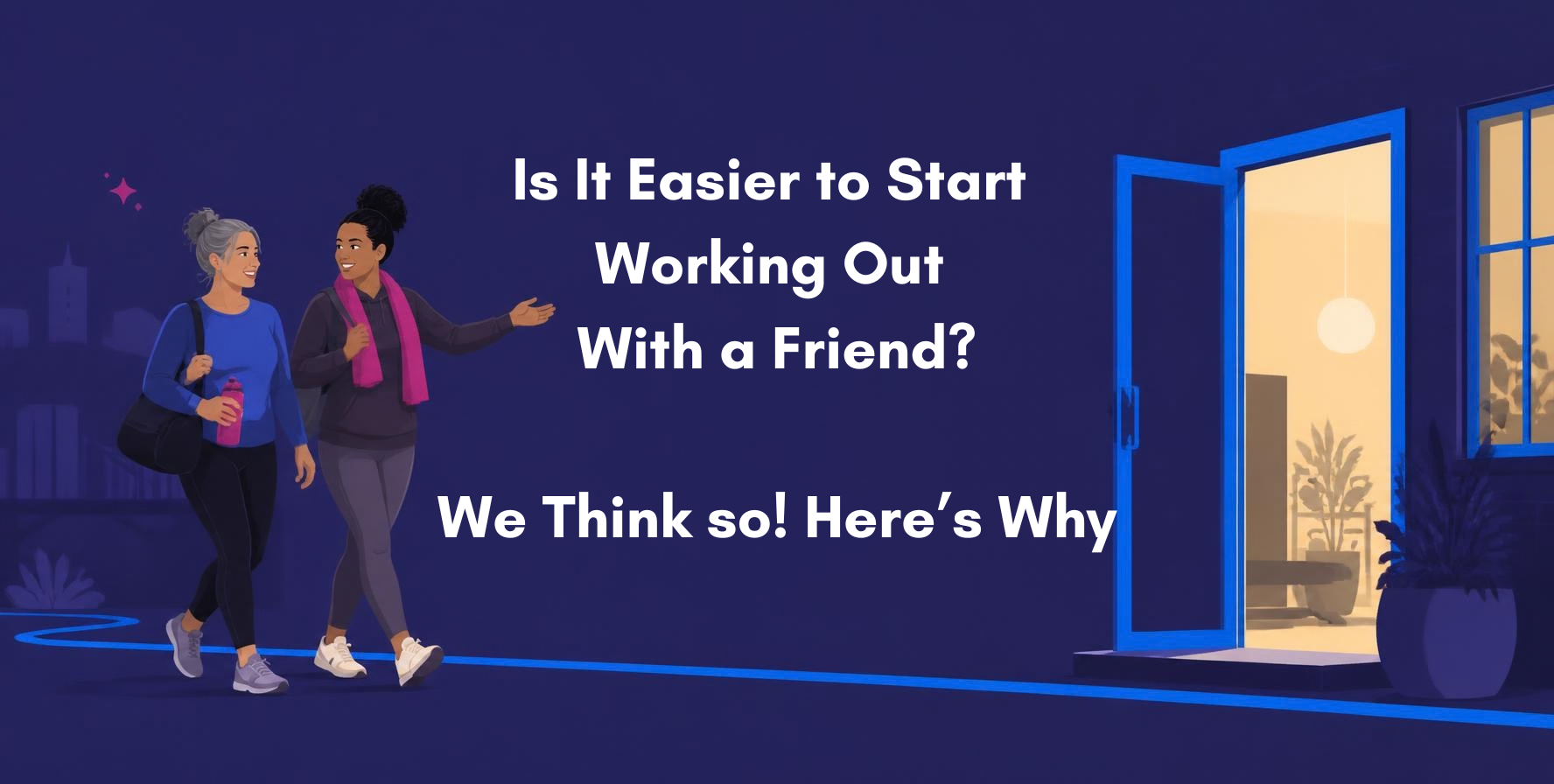
Most people who never start working out aren't scared of the workouts. They're scared of walking in alone. New building, new faces, equipment you don't recognize, and a quiet worry that everyone else already knows what they're doing. A friend changes that math fast.
Yes, it's easier to start working out with a friend. Someone you trust lowers the fear of walking in alone and gives you a reason to show up that first day. But a friend mostly helps you start. What keeps you going long term is structure: a plan, a coach, and habits that become your own.
Because the hardest part of starting isn't physical. It's the unknown. A friend turns "a gym full of strangers" into "a place my friend goes," and that one shift is often enough to get someone through the door.
Research on exercise adherence has pointed in the same direction for decades: people who feel socially supported are more likely to start and more likely to stick around. That matches what we see at Pittsburgh FIT. Coach Jodi Butler has watched it play out since opening the gym in Pittsburgh's East End in 2013. A huge share of the people who stay for years didn't find us on their own. Someone they trusted told them to come.
A friend also takes the decision off your plate. You're not weighing whether this gym is right, whether you're ready, or whether this is the week. Someone you trust already vouched for it. You just have to show up.
It helps, but not in the way most people expect. A friend is great at getting you started. A friend is a shaky foundation for staying consistent.
If your whole routine depends on one other person, it lives and dies with their schedule. Their kid gets sick, their job gets busy, they move across town, and suddenly you're back to square one. The friend got you in the door, but you never built anything that belonged to you.
The people who stay consistent use the friend as a launch, then build their own reasons to keep going. That's where coaching, a real plan, and visible progress come in.
Mallory is a good example. Two years ago, a close friend recommended Pittsburgh FIT, and Mallory took her word for it.
Mallory is a physician assistant in audiology. She also works a second job at Crate & Barrel, takes care of her dog, and has a cookbook collection and spice cabinet that would impress a professional chef. Her goal coming in was refreshingly honest: she wanted a consistent workout routine for the first time as an adult.
Her friend didn't train with her or plan her workouts. The recommendation got her in the door. What happened next was all Mallory, with a coaching team behind her.
Someone in your corner who is invested in your progress, plus a plan built around your actual life. For Mallory, that corner was two coaches.
She started personal training with Coach Isabel twice a week. She knew both her training and her eating needed attention, and she made a smart call to tackle one thing at a time. She felt stronger quickly and started seeing more muscle definition, but her body composition wasn't changing the way she hoped. She wanted to lose body fat, have more energy, and get her wedding ring to fit comfortably again.
So she added nutrition coaching with Coach Heather Benek, our Director of Nutrition. Coach Heather sees this constantly in nutrition sessions: people training hard while running on empty. Together they looked at what Mallory ate and when. More protein, more vegetables, less sugar, and tracking her meals so she was fueling her workouts instead of under-fueling them, with room for treats that fit her plan.
In four weeks, Mallory lost 10.2 pounds of body fat and gained muscle. Her visceral fat level dropped from 16 to 13, which lowers her risk of preventable disease. Her wedding ring fits comfortably again, and her clothes fit better. In the gym, she's hit a 125 lb back squat and a 65 lb strict press.
The part she'd probably point to first, though, isn't a number. Asked what she gained, it was consistency doing something for herself. Asked what she lost, it was putting herself last, along with the energy crashes that came from under-fueling.
That's the real handoff. Her friend made the first step feel safe. Her coaches made the next hundred steps make sense. Two years later, the habits are hers.
If you want a realistic picture of how that progress unfolds, read How Long Does It Take to See Results From Strength Training? and What Does the First Month of Coached Training Actually Look Like?
You can still start with someone in your corner. It just looks different. A coach can be that trusted person from your very first visit.
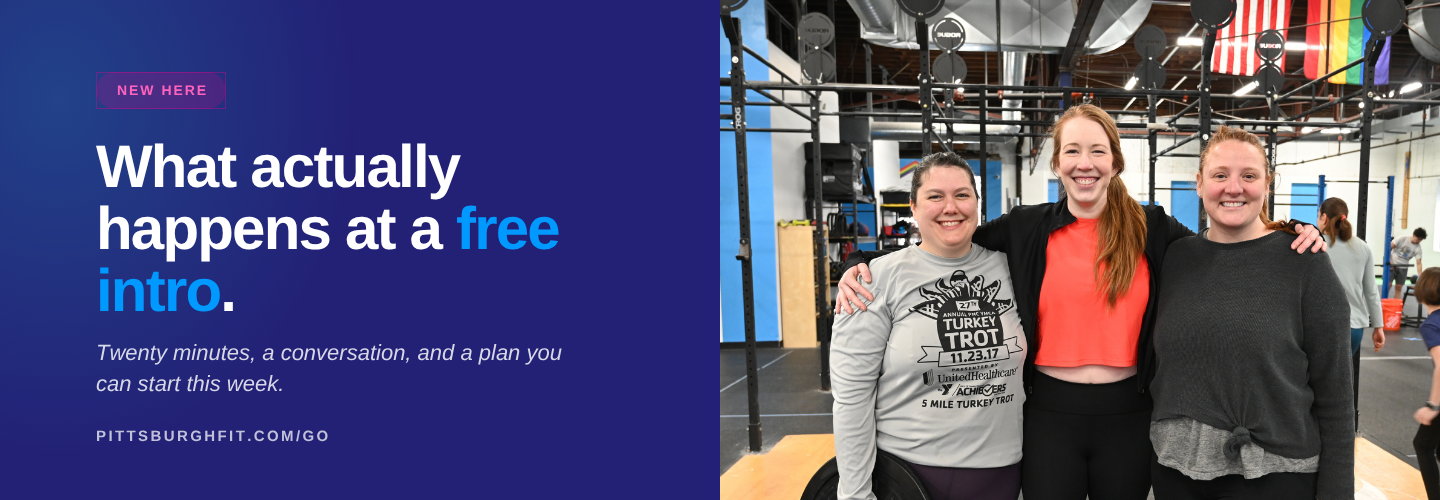
Plenty of our members walked in alone and found their people once they were here. Group classes are built so nobody stands off to the side, and personal training gives you one coach who knows your name, your history, and your goals from day one. If you're curious what a first conversation with a coach looks like, here's What Actually Happens at a Free Intro at Pittsburgh FIT?
And if your real worry is whether you can handle a class as a beginner, we answered that directly in What Happens at Your First Group Fitness Class (and Can You Keep Up)?
Make it specific, make it small, and go with them. "Come to Thursday's class with me" works much better than "You should really join my gym."
Most people say no to big commitments and yes to small plans. Skip the sales pitch about results or memberships. Offer a specific day, tell them what to wear, and promise you'll be right there. If they're nervous, say so out loud: "I was nervous my first time too." That one sentence does more than any pitch.
If the person you most want to bring is your partner and they keep saying no, that's a different conversation. We wrote about it in What Do You Do When Your Partner Won't Work Out With You?
Either way, you're not recruiting. You're doing what Mallory's friend did, making the first step feel safe enough to take.
Bring a friend this month
Bring a Friend Week runs October 19 to 25 at Pittsburgh FIT. Bring a friend to any group fitness class all week for free, or bring them into your personal training session. Members and non-members are welcome, as long as you bring someone. Here's everything you need to know: Bring a Friend Week at Pittsburgh FIT: What to Expect.
Sign up at PittsburghFIT.com/Go
Is it better to start working out alone or with a friend?
Starting with a friend is usually easier because someone you trust lowers the fear of a new place and gives you a reason to show up. For staying consistent, the bigger factors are a structured plan and a coach. The best approach is often a friend to start and a coach to keep you going.
Does working out with a friend help with consistency?
It helps early on, but a routine that depends entirely on one person is fragile. When their schedule changes, yours often falls apart too. People stay consistent when they build their own reasons, see progress, and have a coach or community that keeps them on track regardless of who else shows up.
What if none of my friends want to work out with me?
You can start without one. At a coached gym, a coach becomes your trusted person from the first visit, and group classes are designed to welcome newcomers. Many Pittsburgh FIT members started alone and found their workout friends once they were already training here.
How do I ask a friend to work out with me?
Make it a small, specific invitation, like one class on a set day, instead of a big commitment. Tell them what to wear, promise to be there with them, and skip the sales pitch. Admitting you were nervous your first time too often makes the yes much easier.

.png)

.png)

.webp)
.webp)
.webp)
.webp)
.webp)




.webp)

.webp)







.webp)


.webp)
.webp)



.webp)
.webp)
.webp)
.webp)
.webp)
.webp)
.webp)
.webp)
.webp)
.webp)
.webp)
.webp)
.webp)
.webp)
.webp)
.webp)
.webp)
.webp)
.webp)
.webp)
.webp)
.webp)
.webp)
.webp)
%2520(1).webp)
.webp)
.webp)
.webp)
.webp)
.webp)
.webp)
.webp)
.webp)
.webp)
.webp)
.webp)
.webp)
.webp)
.webp)
.webp)

.webp)
.webp)
.webp)
.webp)
.webp)
.webp)
.webp)