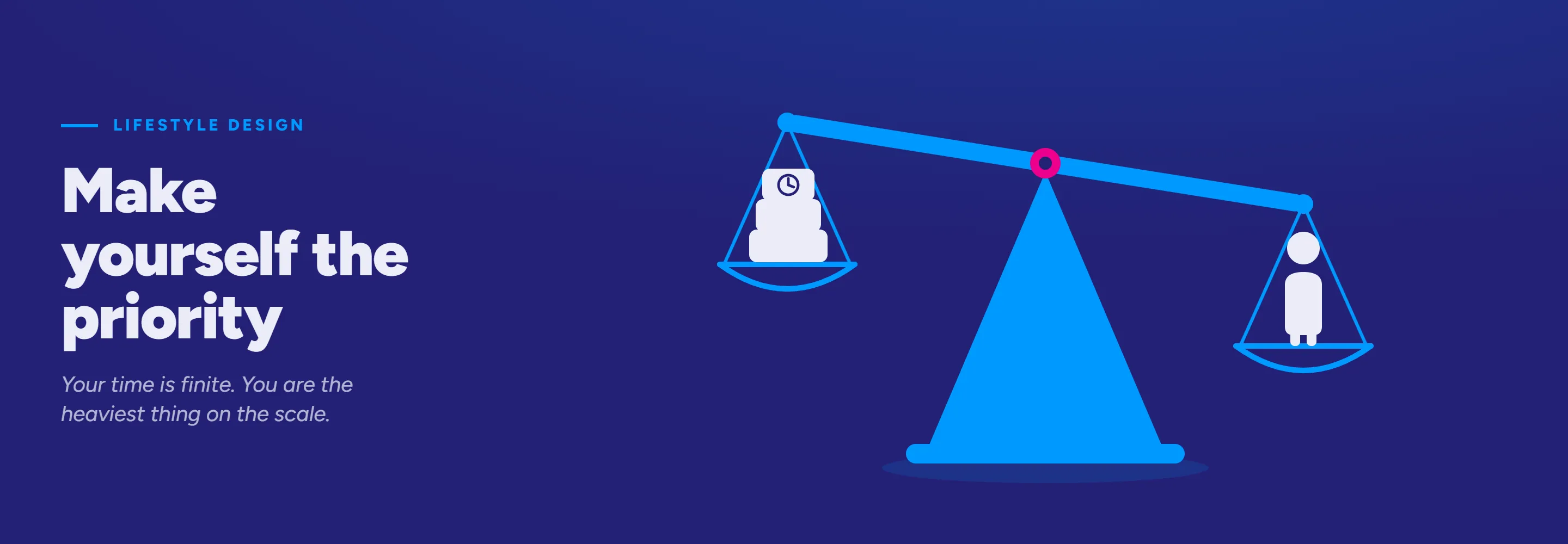
At some point in this decision you stop asking whether coaching works and start asking whether it is worth what it costs. That is a fair question and it deserves a straight answer rather than a sales pitch.
Here is the direct answer. Personal training is worth the money after 40 if you have repeatedly failed to stay consistent on your own, if you are training around pain or injury, or if you have limited hours and need every one of them to count. It is not worth it if you already train consistently, progress steadily, and move without pain.
That is the honest version. Below is how to figure out which group you are in.
Why Does Training After 40 Need More Supervision Than It Used To?
Because the margin for error genuinely narrows, and the cost of a mistake goes up.
In your twenties you could train badly and get away with it. Recovery was fast, tissue was forgiving, and a tweaked back was a bad week rather than a bad quarter. After 40 that changes. You start losing muscle mass gradually unless you actively train against it. Recovery takes longer. Old injuries that used to go quiet start speaking up. Chronic stress and mediocre sleep, which most working professionals have plenty of, blunt your ability to adapt to hard training.
None of that means you are fragile. It means the plan has to be better than it used to be. Guessing worked when your body absorbed the guessing. Now it does not.
Ameet is a professor at CMU who stayed active through basketball and swimming but had chronic knee and shoulder pain that kept sending him back to physical therapy. He came to Pittsburgh FIT to learn to strengthen safely with Coach Geremy. He now squats below parallel with zero knee pain for the first time in years and presses overhead without his shoulder complaining. His wife Ginger joined after watching what happened.
That outcome is not really about effort. It is about someone qualified deciding what he should and should not be doing.
What Do You Get That a Gym Membership Does Not Include?
A membership sells you access to equipment. Coaching sells you the decisions about how to use it.
You get a plan built around your body, your injuries, and how many hours you can genuinely commit. You get progressive overload managed across months rather than guessed at week to week. You get somebody watching you move who catches the problem before it becomes an injury. You get the session adjusted on the days you arrive tired instead of failing the workout and losing momentum.
And you get the thing we spent the first two parts of this series on, which is a fixed appointment with a person who expects you.
Pete is 51 and a tech executive who came in with almost no lifting experience back in 2019. He works with Coach Jami and focused on the boring fundamentals, bench and squat and deadlift and core. He now trains three times a week, has dropped four percent body fat, gained ten pounds of muscle, and moves 225 pounds on the bench for sets of three. Damian, who is over 60 and runs a salon on Centre Ave, spent 2019 dealing with knee, hip, and back pain. Over six months of personal training twice a week he lost 23 pounds of body fat, dropped 13 percent body fat, cut his visceral fat in half, gained nine pounds of lean muscle, and went from zero pull-ups to seven.
Neither of them got those results from having gym access. They had gym access before.
What Does Personal Training Actually Cost?
We will give you exact numbers at your intro rather than publish a price list that ignores what you actually need, because someone training twice a week with a coach and someone doing one session plus group classes are two different conversations.
What we will tell you plainly is that coached personal training is priced like a professional service, not like a gym membership, and most people who commit to it stay with us for years. The average tenure among our long-term clients is over four years, which is not what happens when people feel they are overpaying.
One thing worth knowing before you rule it out on cost: personal training and nutrition coaching are frequently eligible expenses under an HSA or FSA when there is a documented medical need. A lot of people never look into this and pay entirely out of pocket for something their pre-tax dollars could have covered. We have a page walking through how it works.
When Is Personal Training Not Worth It?
There are real cases where the answer is no, and we would rather tell you that at the intro than take your money.
If you already train three or four times a week without needing to think about it, your numbers are still climbing, and nothing hurts, you likely do not need one-on-one coaching. Group fitness or semi-private training will serve you better at a lower cost.
If you are looking for a short-term push toward a specific date and have no interest in what happens after, coaching is an expensive way to buy six weeks of accountability.
And if what you actually need is a nutrition intervention rather than a training one, we will point you toward Heather Benek and our nutrition program instead. Plenty of people come in convinced their problem is that they are not training hard enough, and the honest answer is that their training is fine and their eating is undermining it.
How Do You Know if It Will Stick This Time?
The question people are actually asking here is whether they will quit again, and it is a reasonable fear if you have quit before.
The best predictor is not how motivated you feel right now. Motivation at the decision point tells you nothing, because everybody feels motivated at the decision point. The better predictor is whether you can name the specific hour this is going to happen and whether someone will be there expecting you.
Maurice found his and has trained twice a week for two years, going from a 75 pound deadlift to 215. Joel found his nine years ago and still does one burpee for every year he has been alive on his birthday, which was 71 of them last time. Pete and Regina Vercilla found theirs together and have been training with Coach Geremy for over two years, through a broken arm and a shoulder injury that Regina came back from stronger than she went in.
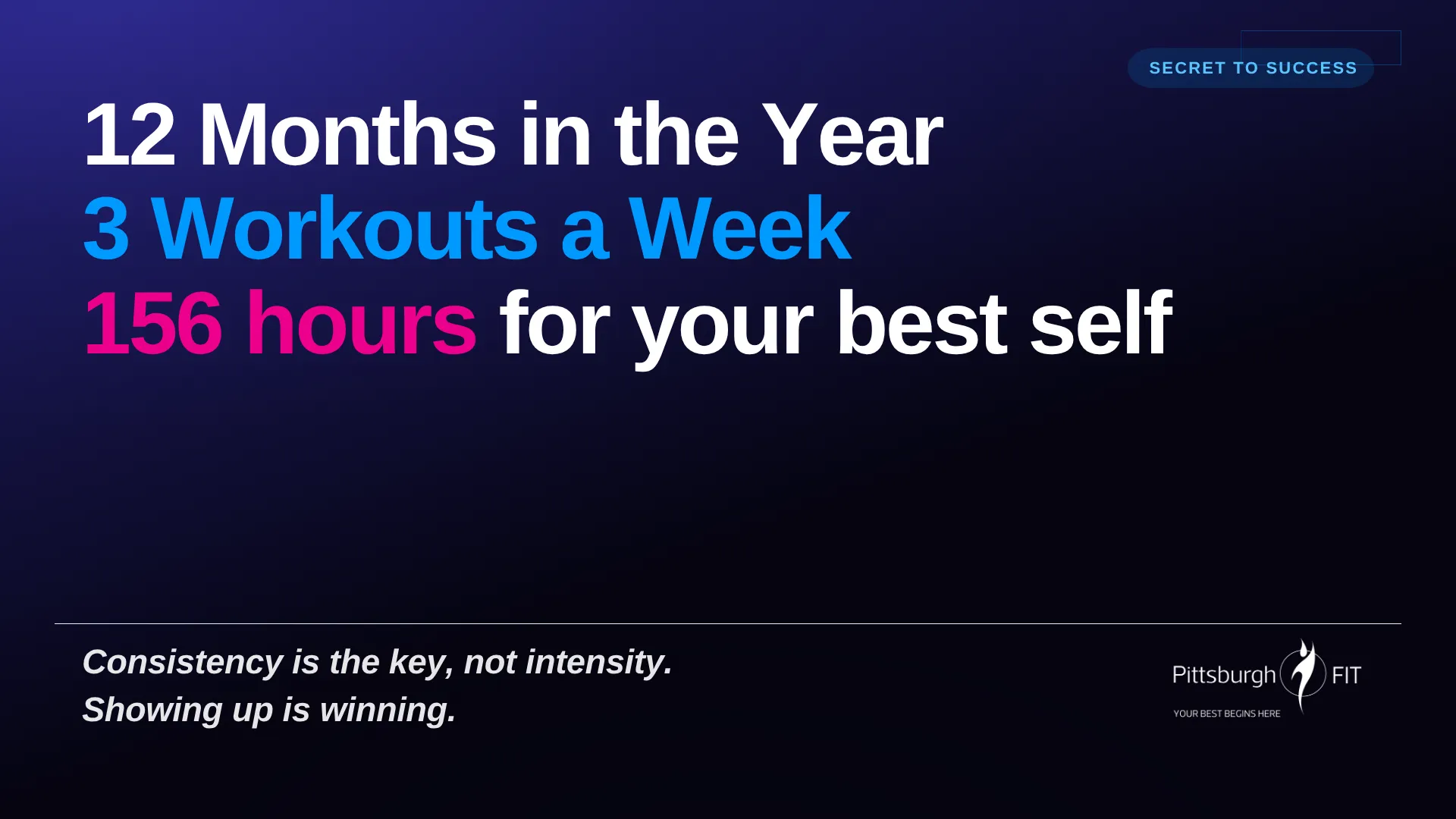
None of them are unusually disciplined people. They just stopped trying to fit training into whatever was left over at the end of the day and gave it an hour with a name on it.
Find out if it is the right fit, at no cost.

Spend 45 minutes with one of our coaches at 210 Thomas St. Tell them what your week actually looks like, what hurts, and what you have already tried. They will tell you honestly whether personal training is the right call for you or whether something else fits better.

We currently have personal training availability at 6AM, 8AM, and 5PM.

Book your free intro: PittsburghFIT.com/Go
FAQ
Is personal training worth the money after 40?
It is worth it if you have struggled to stay consistent alone, you are training around pain, or you have limited time and need each session to count. After 40 the margin for error narrows, so a well-designed plan produces far more per hour than guessing does.
Is personal training covered by HSA or FSA?
Personal training and nutrition coaching are often eligible HSA or FSA expenses when there is a documented medical need, such as managing a diagnosed condition. Many people pay entirely out of pocket without realizing pre-tax dollars could have covered part of the cost.
How long before you see results from personal training?
Most clients notice better energy and sleep within a few weeks, meaningful strength gains within two to three months, and visible body composition changes by month four or five. The pace depends heavily on nutrition, sleep, and how consistently sessions are kept.
Is personal training better than group fitness?
Neither is better in the abstract. Personal training is the right fit when you have injuries, limited time, or a history of falling off. Group fitness works well for people who already train consistently and want community and structure at a lower cost.
Do I need experience before starting personal training?
No. Beginners often benefit the most, because they are at the highest risk of building bad habits or getting hurt while guessing. Coaches at Pittsburgh FIT regularly start clients who have never lifted a barbell in their lives.

.webp)
.webp)
.webp)
.webp)
.webp)





.webp)

.webp)








.webp)


.webp)
.webp)



.webp)
.webp)
.webp)
.webp)
.webp)
.webp)
.webp)
.webp)
.webp)
.webp)
.webp)
.webp)
.webp)
.webp)
.webp)
.webp)
.webp)
.webp)
.webp)
.webp)
.webp)
.webp)
.webp)
.webp)
%2520(1).webp)
.webp)
.webp)
.webp)
.webp)
.webp)
.webp)
.webp)
.webp)
.webp)
.webp)
.webp)
.webp)
.webp)
.webp)
.webp)

.webp)
.webp)
.webp)
.webp)
.webp)
.webp)
.webp)
.webp)
.webp)
.webp)
.webp)
.webp)
.webp)
.webp)
.webp)
.webp)
.webp)
.webp)