.webp)
You already know this from experience, even if you've never said it out loud.
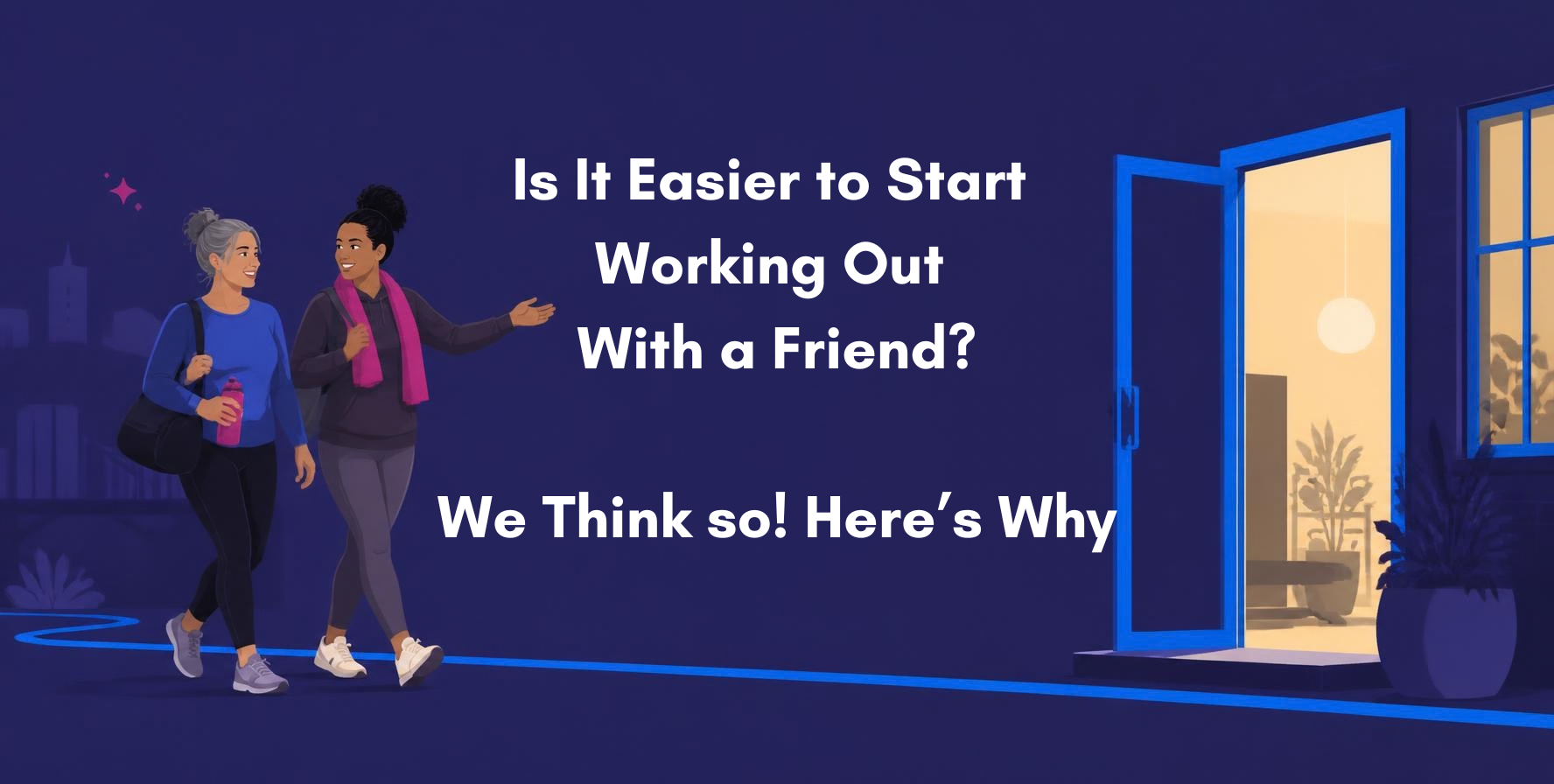
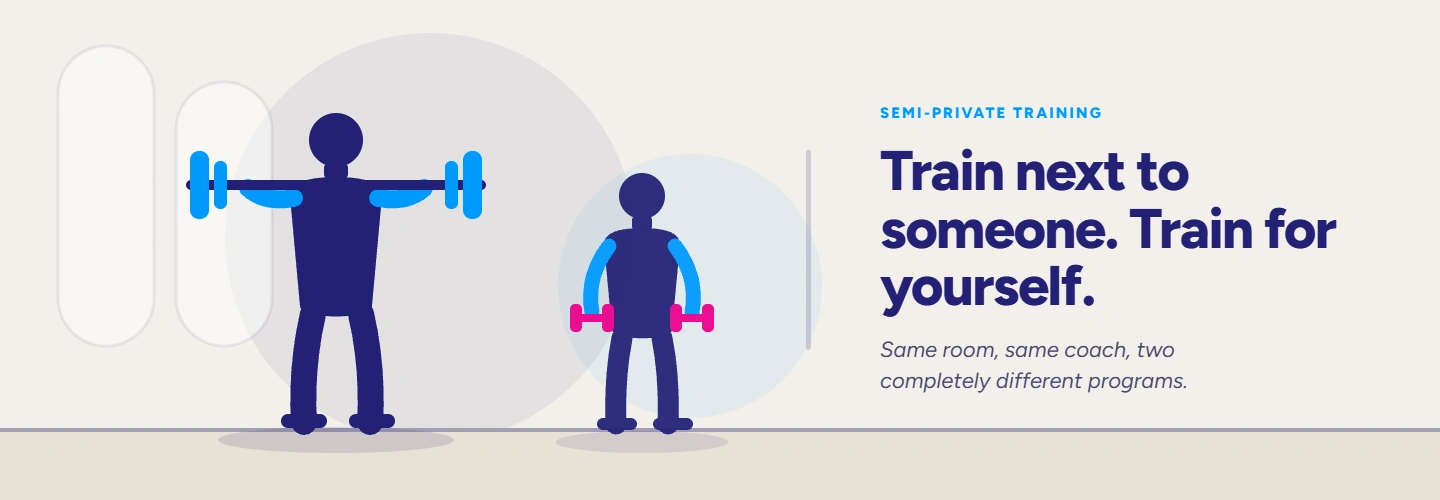
The workout you do alone in your basement at 6am and the identical workout you do with eight other people are not the same workout. Same movements, same weights, same clock. Completely different outcome. You went harder in the room with people, you stopped less, and afterward you felt better about it.
That's not a character flaw or a sign you lack discipline. It's one of the most reliable observations in fitness, and it's worth understanding, because once you know why it happens you can use it deliberately instead of hoping it shows up.
Most training plans are built around physiology. Sets, reps, intensity, recovery. All of that matters and none of it is the reason people quit.
People quit because the plan required something from them that they only had on good days. And a workout done alone requires quite a lot: you have to decide to start, decide how hard to go, decide when it's over, and then decide to do it again on Thursday. Every one of those decisions costs something, and on a bad week you don't have it to spend.
Put the same workout in a room with other people at a fixed time and most of those decisions disappear. You didn't decide when to start, the clock did. You didn't decide when to stop, the workout did. You didn't decide how hard to go, because the person next to you set a pace and you found yourself matching it without ever consciously choosing to.
That's the whole mechanism. It isn't about competition and it isn't about being pushed. It's that a shared effort removes most of the negotiating you'd otherwise have to do with yourself.
Here's the thing that surprises people most.
Hard things hurt less in a group. Not measurably less in terms of what's happening in your muscles, but less in terms of what you notice. When you're alone, the discomfort of a long effort is the only thing in the room, so your attention lands on it constantly. When there are people around you, your attention has somewhere else to go. Someone's breathing, someone's pace, the fact that the person next to you is clearly having a worse time than you are and hasn't stopped.
Ask anyone who's finished a long, genuinely brutal workout in a full room. They rarely describe it as painful. They describe it as loud, or fast, or a blur. That's not toughness. That's attention working differently.
Once a year we do Murph on the Saturday of Memorial Day weekend. It's two miles of running with six hundred reps of bodyweight work in the middle, done in honor of Lt. Michael Murphy, a Navy SEAL killed in Afghanistan in 2005. People come who've never set foot in the gym. People come who've done it ten years running.
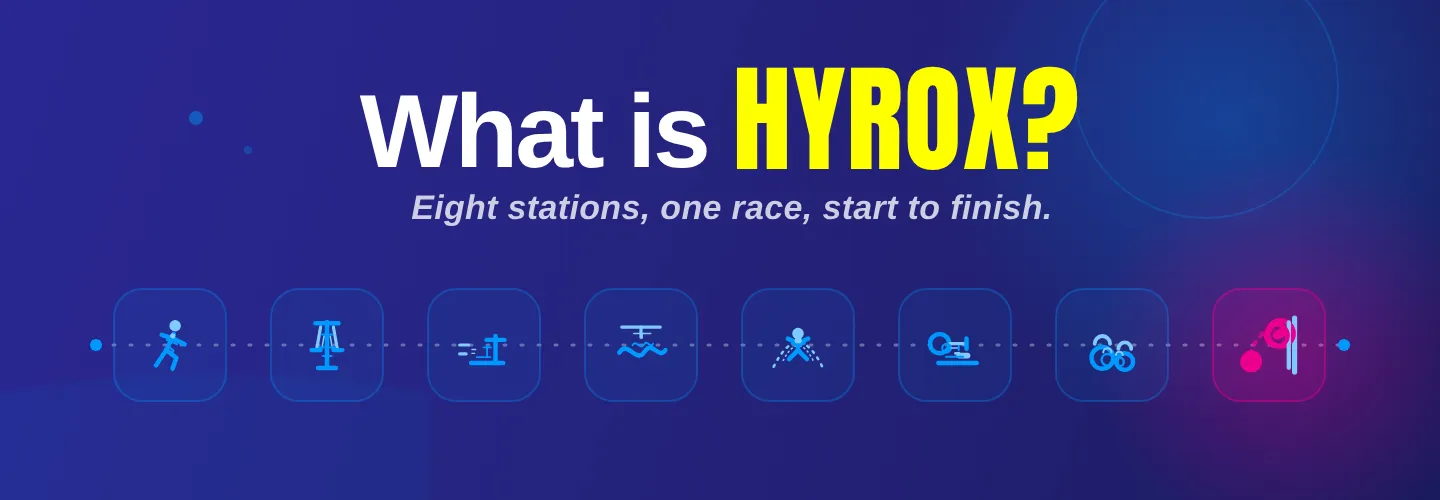
We've also hosted powerlifting fundraisers where the age range in the room ran from seventeen to seventy, and half-HYROX events where everyone who started finished.
None of these are the point of anyone's training program. You don't get fitter because of one Saturday in May. But they do something that a well-designed Tuesday can't, which is give people evidence about themselves that they didn't have before.
Somebody who's been quietly convinced they're not an athlete finishes a workout alongside people they assumed were way ahead of them, and the story they've been telling themselves gets harder to keep believing. That's worth an occasional hard Saturday.
You don't need an event for any of this. The everyday version is simpler and matters more.
Train at a time, not when you get around to it. The single biggest predictor of whether someone is still training in four years is whether their sessions live on the calendar like meetings. A fixed time with other people expecting you is the strongest version of this, but even a fixed time alone beats a floating intention.
Find one person who notices when you're not there. That's it. Not a training partner you have to coordinate with, not an accountability app. One person whose absence you'd notice and who'd notice yours. The obligation is light and it's remarkably effective.
Let other people set the pace sometimes. Left to your own judgment, most of us either go too hard on days we feel good or coast on days we don't. Working next to someone tends to pull you toward the middle, which is where most of the useful training actually lives.
Don't outsource all of it. A group can carry your effort but it can't carry your technique, your loading, or whether the program is right for your body and your goals. That's the trade-off, and it's why group work is a great on-ramp and a poor destination. The people who get the most out of it use the room for consistency and get the specifics handled individually.
Community is not a training program. It's the thing that makes a training program survive contact with a real life.
If you're doing the same workout as everyone else at the same weight for two years, you'll get the consistency benefit and eventually stop progressing, because your body will have adapted to exactly what you keep asking of it. The answer isn't to train alone. It's to keep the room and get the programming individualized as you go.
That's roughly how it works here. Group sessions are where a lot of people start and where a lot of people find the consistency they couldn't build alone. Then, when the ceiling shows up, the coaching gets more specific rather than the community getting dropped.
You get to keep both. Most people assume they have to choose.



.png)

.png)

.webp)
.webp)
.webp)
.webp)
.webp)





.webp)

.webp)





.webp)


.webp)
.webp)



.webp)
.webp)
.webp)
.webp)
.webp)
.webp)
.webp)
.webp)
.webp)
.webp)
.webp)
.webp)
.webp)
.webp)
.webp)
.webp)
.webp)
.webp)
.webp)
.webp)
.webp)
.webp)
.webp)
%2520(1).webp)
.webp)
.webp)
.webp)
.webp)
.webp)
.webp)
.webp)
.webp)
.webp)


.webp)
.webp)
.webp)
.webp)
.webp)
.webp)

.webp)
.webp)
.webp)
.webp)
.webp)