.webp)
Ask someone a year into consistent training what changed and they will usually struggle to answer. Not because nothing did, but because the biggest change is the hardest one to point at. The physical results are real. They're also the smaller half of the story.
After a year of consistent strength training, the most significant change is that training stops requiring a decision. Physically, most people are substantially stronger, have added meaningful muscle, and have improved bone density, blood markers, and resting energy. Behaviorally, exercise has moved from something they motivate themselves to do into something they simply do.
That behavioral shift is what separates a year from a really good twelve week stretch.
More than most people expect, in ways that go well past appearance.
Strength gains over a year are substantial. Someone who started with an empty barbell is often deadlifting well over their bodyweight. Lifts that felt like a ceiling in month three become warm-ups. Muscle tissue has genuinely been added, which raises resting metabolic rate and makes body composition easier to maintain than it was at the start.
Less visible and more important: a year of loading improves bone mineral density, which matters enormously for anyone over 40 and especially for women navigating perimenopause and beyond. Insulin sensitivity improves. Resting heart rate tends to drop. Chronic aches that people assumed were permanent features of getting older frequently resolve, because a lot of what gets blamed on age is actually disuse.
Coach G spent seven years going deep on balance training for exactly this reason. The point of getting strong in your forties isn't your forties. It's whether you can get off the floor unassisted at seventy-five.
Because it's the only thing that protects the physical change.
At three months, training is still something you're doing. At twelve months, it's increasingly something you are. That sounds like a motivational slogan and it's actually a practical distinction. When training is something you do, every session requires a decision, and decisions are expensive when work gets busy. When it's part of your identity, the default flips. Missing feels strange rather than skipping feeling easy.
This is why the first year matters more than any individual program inside it. People who make it through a full year, including the vacations and the sick weeks and the brutal work quarters, have proven to themselves that their training survives real life. That's a different kind of confidence than a PR.
It looks like almost everyone's year, because nobody's is perfect.
A realistic strong year includes a couple of weeks off for travel, a stretch where work swallowed everything and training dropped to once a week, at least one minor injury or illness, and a month where motivation was simply absent. None of that disqualifies the year.
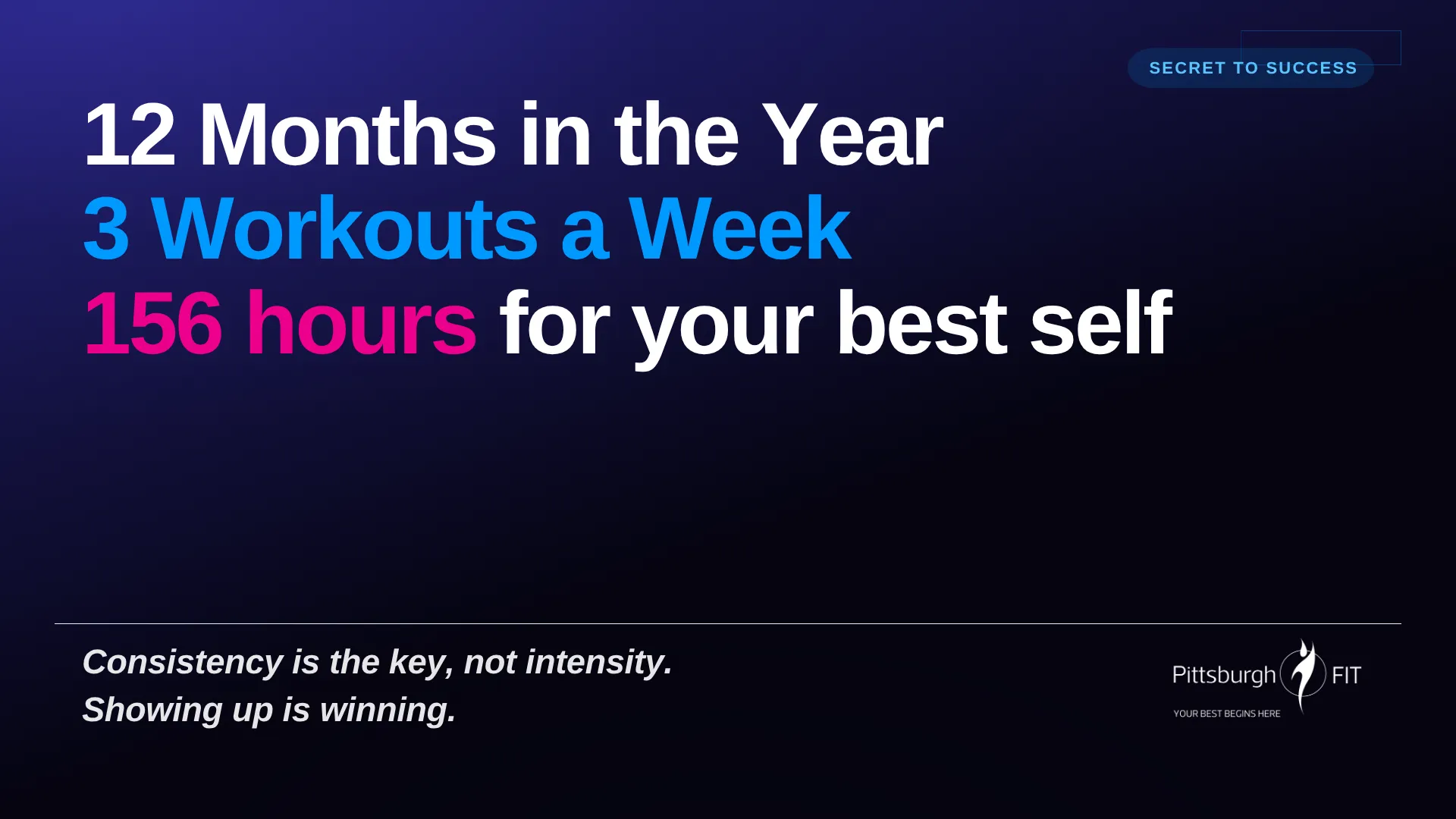
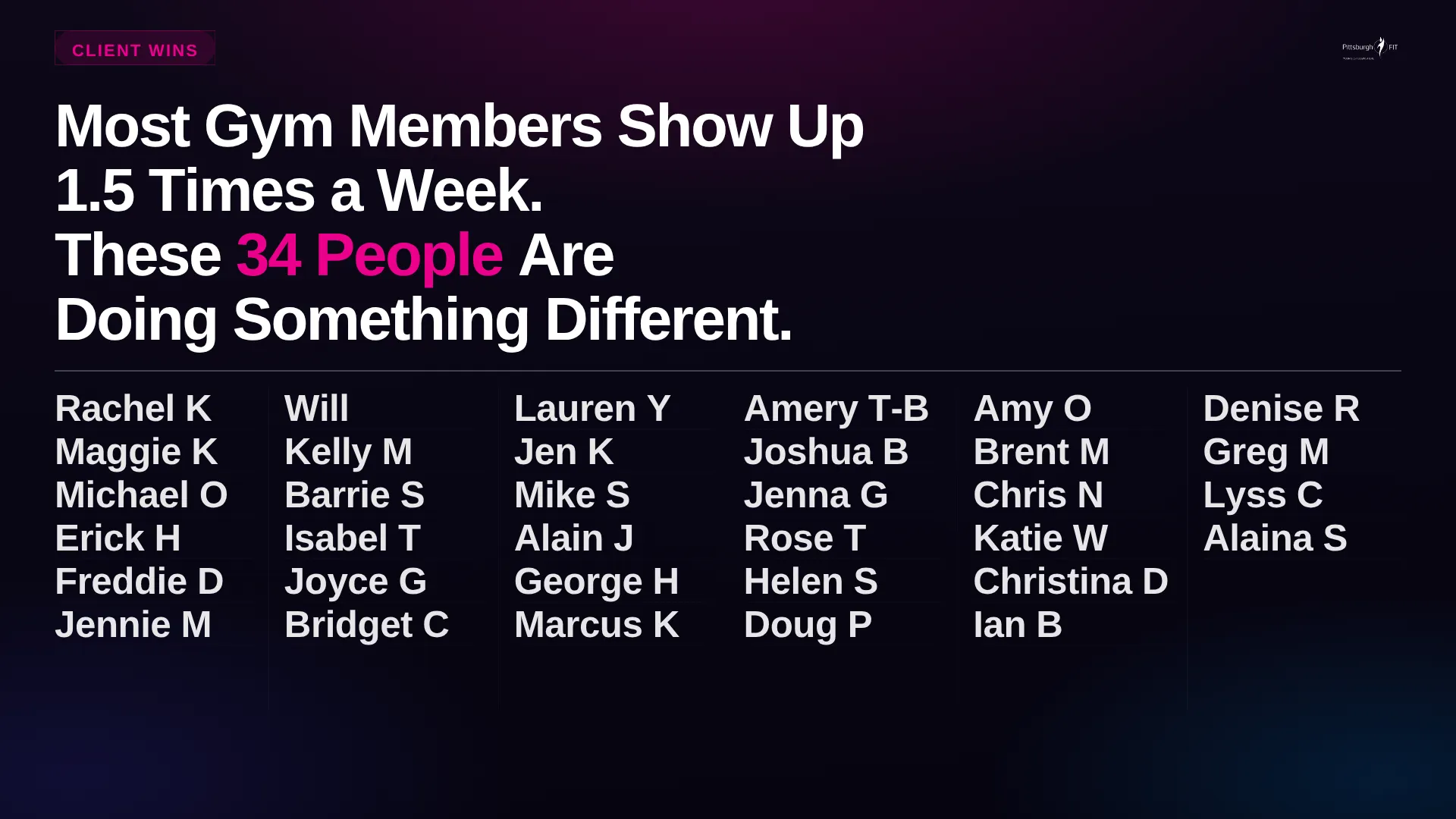
We wrote separately about what consistency actually looks like in the numbers at our gym, and the honest version is that our most consistent members are not the ones who never miss. They're the ones whose missed weeks stay weeks instead of becoming quarters.
The people who struggle are the ones running an all-or-nothing operating system, where a missed week reads as failure and failure reads as a reason to stop. That restart cycle is a structure problem, and it's fixable.
Yes, and most people who get there aren't.
The members we see hit a strong year one are overwhelmingly normal professionals in their forties and fifties who come in from Regent Square, Point Breeze, Wilkinsburg, and around the East End, train two or three times a week, and are otherwise busy with work and families. They're not unusually disciplined. They built something that fit.
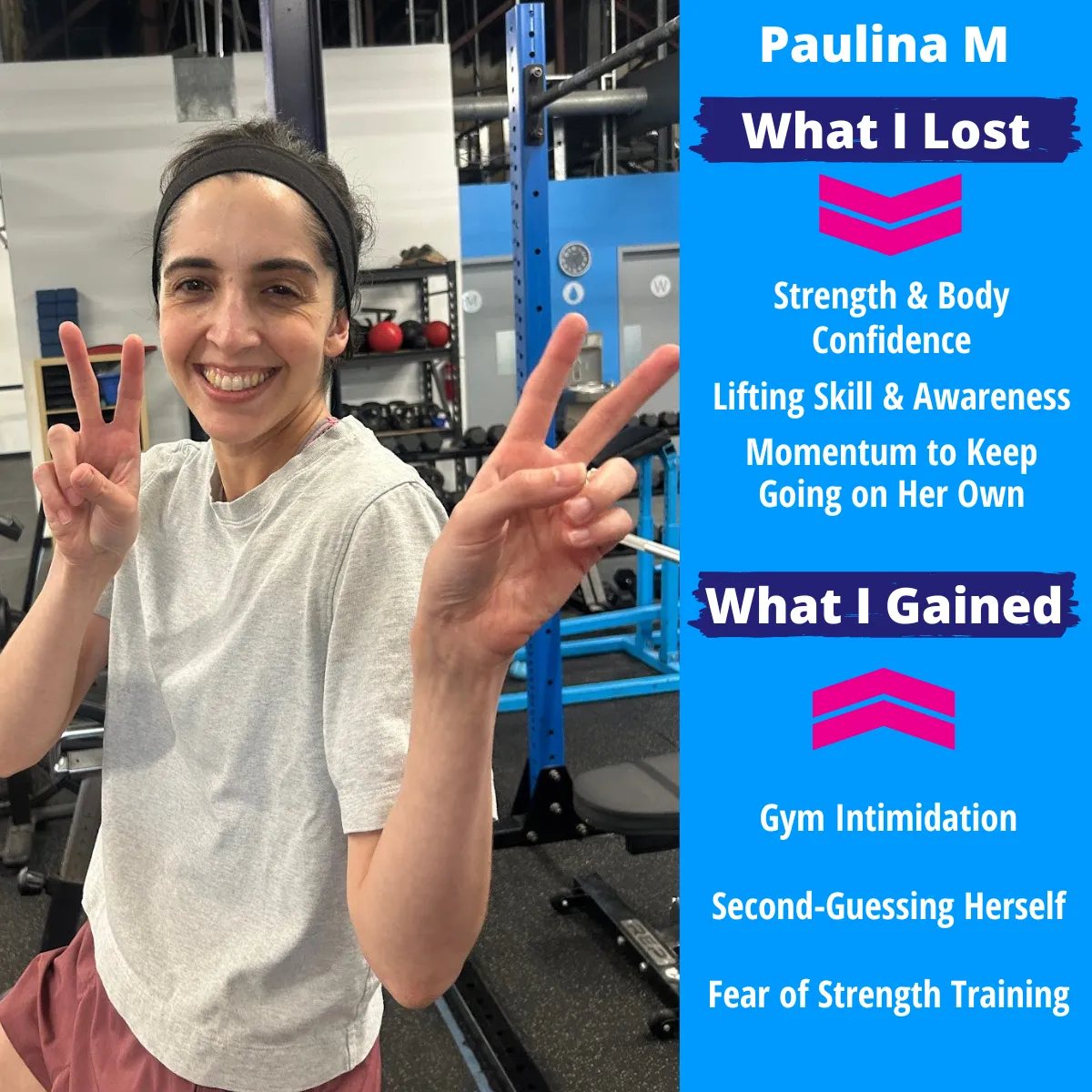
Paulina is a good example of how the early part of that looks. She came to us after grad school genuinely intimidated by strength training, convinced that side of the gym wasn't for her. Working steadily with progressive overload and full body sessions, she went from dumbbells to the barbell, and the equipment stopped being intimidating entirely. Her progress was never dramatic in any single week. It was just consistent, which is the part nobody posts about and the only part that compounds. We wrote up her story in more detail separately.
Mostly, keep going, with two adjustments.
The first is programming. What worked in year one, which was largely just showing up and adding weight, needs more structure in year two. Progress slows and requires more deliberate periodization. This is where a lot of self-directed people plateau and where coaching earns its keep.
The second is goals. Year one goals are usually about the body. Year two goals work better when they're about capability, because capability goals keep pulling you forward when appearance goals have already been met. Train for the hike. Train for the event. Train for the thing you want to still be doing at seventy.
That's part of why we run events like the partner HYROX simulation in September. Not because everyone needs to race, but because having something specific on the calendar changes what training is for.
You get stronger, and that's the part you expected. Your bones get denser, your blood work improves, and your old aches quiet down, and those matter more than they sound like they do.
But the change people describe a year in is smaller and stranger than any of that.
They stop negotiating with themselves on Tuesday mornings. The gym stops being a place they're trying to become a person who goes to.
If you're at the beginning of that, the first two weeks are where this series started, and they're a lot less mysterious than they feel.
Most people are substantially stronger, have added meaningful muscle, and see improvements in bone density, insulin sensitivity, and resting heart rate. The larger change is behavioral. After roughly a year of consistency, training stops requiring active motivation and becomes a default part of the week.
Progress varies with starting point, but it is common for someone beginning with minimal training experience to more than double their main lifts within a year. Someone starting with an empty barbell often reaches deadlifts well above their own bodyweight, with the fastest gains arriving in the first three months.
No. A realistic successful year includes vacations, illness, busy work stretches, and periods of low motivation. What distinguishes people who succeed is not avoiding missed weeks but keeping missed weeks from becoming missed months. Consistency over a year matters far more than intensity in any given week.
Yes. Loading bone through resistance training is one of the most effective known interventions for maintaining and improving bone mineral density, which becomes increasingly important after 40 and especially for women during and after perimenopause. This benefit accumulates with sustained training over years.
Two things. Programming needs more deliberate structure, since simply adding weight stops working once early gains are exhausted. Goals also work better when they shift from appearance-based to capability-based, such as training for a specific event, hike, or physical standard you want to maintain long term.

.png)


.png)





.webp)
.webp)
.webp)
.webp)





.webp)

.webp)








.webp)


.webp)
.webp)



.webp)
.webp)
.webp)
.webp)
.webp)
.webp)
.webp)
.webp)
.webp)
.webp)
.webp)
.webp)
.webp)
.webp)
.webp)
.webp)
.webp)
.webp)
.webp)
.webp)
.webp)
.webp)
.webp)
.webp)
%2520(1).webp)
.webp)
.webp)
.webp)
.webp)
.webp)
.webp)
.webp)
.webp)
.webp)

.webp)
.webp)
.webp)
.webp)
.webp)
.webp)

.webp)
.webp)
.webp)
.webp)
.webp)
.webp)
.webp)
.webp)