
Reading someone else's success story is easy. Picturing your own first Tuesday is harder, and that is usually the thing standing between curiosity and a start date.
The first month of coached training starts with an assessment, then settles into two or three sessions a week built around a handful of basic movements. A coach sets your starting weights, scales anything that does not fit yet, and repeats the same patterns so your body adapts. Most people feel steadier by week four.
Here is the honest version, week by week, from a gym that has run this process for more than a decade in Pittsburgh's East End.
You talk before you train. A coach asks what you want, what your week actually looks like, and what your body has been through, including old injuries and the stuff you assume nobody wants to hear about.
Then you move. Nothing heavy, nothing timed. A coach watches how you squat, hinge, press, and carry so they know where to start you. If you have never touched a barbell, you will probably spend most of that first session with an empty bar or a dowel.
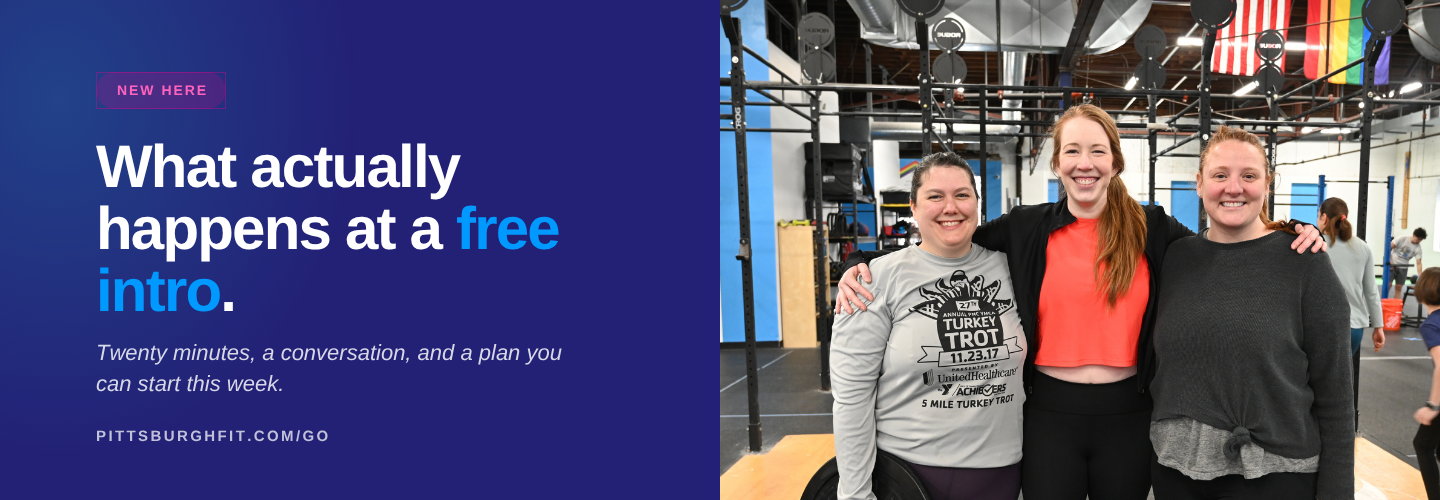
If you want the step-by-step version of that first conversation, we wrote about what actually happens at a free intro in detail.
They start lighter than you expect and let the movement tell them when to add.
Coach Corey Henning does this constantly with new members. The first few weeks are about finding the load where your technique stays clean for every rep, not the load you could survive once. That number is almost always lower than what a motivated new member would pick for themselves, and it is the reason people here are still training four years later instead of nursing something.
Loads climb quickly once the pattern is solid. One of our members started with a 125 pound deadlift and was pulling 205 a few years later. That progression started with a number that felt almost too easy.
Then you do the version you can do, and the full version becomes the goal instead of the requirement.
Every movement scales. Pull-ups get bands. Squats get boxes or a reduced range if a hip is cranky. Running gets swapped for a bike or a row. None of this is a lesser workout. It is the same workout, sized to you.
The members here who now knock out rope climbs and handstand push-ups did not walk in with them. They spent months on the drills first.
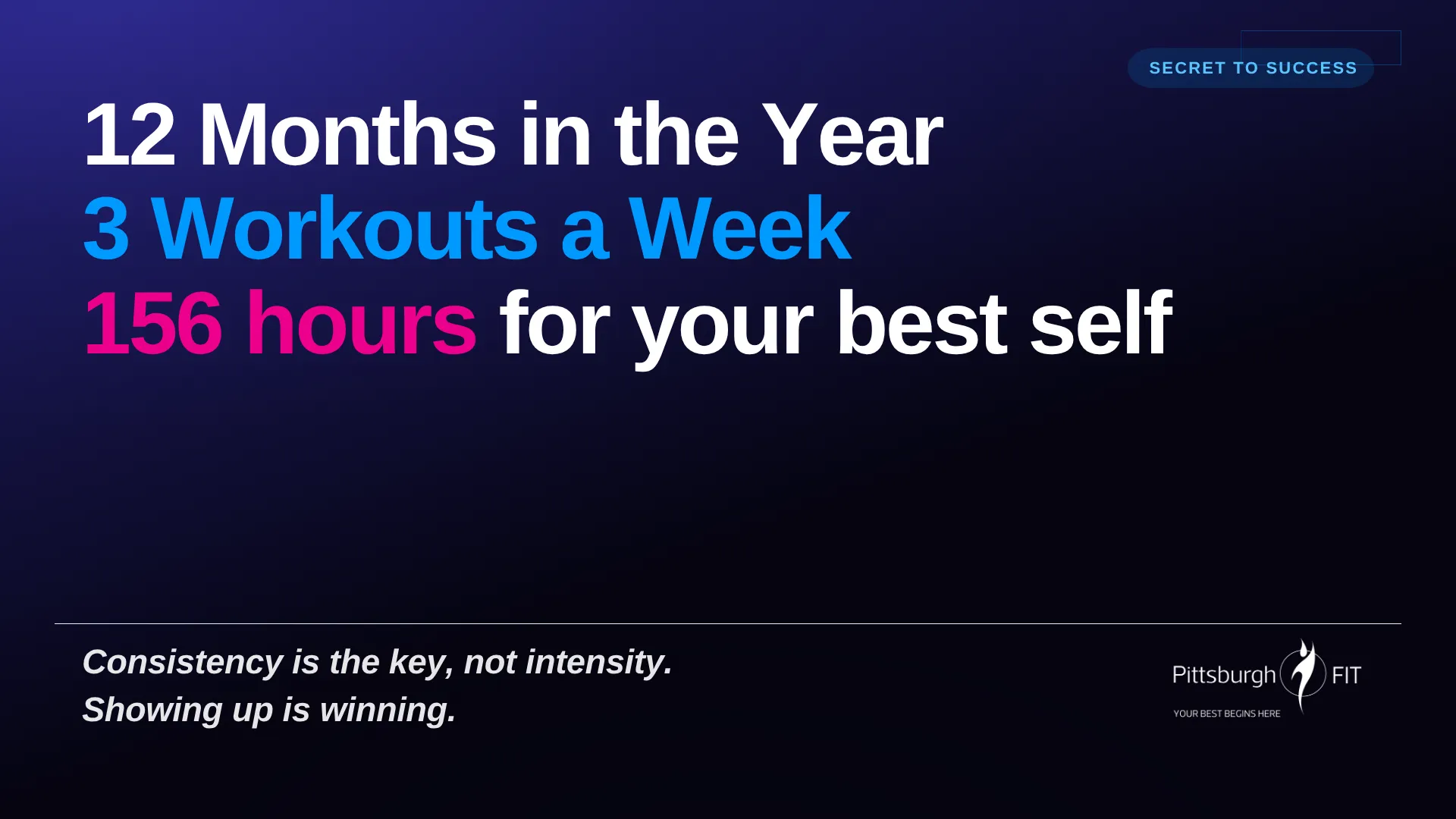
Two or three. That is enough to build real strength and, more importantly, enough to build a habit you can keep during a bad work week.
People who start at five or six days out of enthusiasm usually miss a week by month two and then struggle to restart. People who start at two or three tend to still be here next year. Our longest-tenured members mostly ramped up slowly, once the training had earned a permanent slot in their calendar.
Nutrition questions usually surface around week three, and Coach Heather Benek sees the same one over and over: people try to overhaul everything at once. In month one, protein and sleep will do more for you than any elaborate plan.
Sore in the first two weeks, then noticeably steadier. Most people report better sleep and more energy before they report anything visible.
Four weeks is not long enough for dramatic body composition change, and anyone promising otherwise is selling something. What four weeks does give you is a repeatable pattern, a coach who knows your name and your limits, and proof that you can do the thing you were not sure you could do.
After that, it is just repetition. The members with four-year stories all have an unremarkable first month somewhere behind them. If you want to see what the long version looks like, read how one member went from banded pull-ups to a podium finish.
Book a free intro at Pittsburgh FIT. We will sit down, talk through where you are starting from, and map out what your first few weeks could actually look like. No pressure and no commitment.
Book yours at PittsburghFIT.com/Go.
Do I need to be in shape before starting personal training?
No. Coaches build your program around where you are on day one, including any injuries or limitations. Arriving out of shape is the normal starting point for new members, not an obstacle. The assessment exists specifically so nobody has to guess what they can handle.
How long is a typical first session?
Plan on about an hour. That includes the conversation about your goals and history, a movement screen, and some light training so your coach can see how you move. You will not be pushed to a maximum effort on your first day.
What should I bring to my first training session?
Training clothes you can move in, shoes you could run a short distance in, and water. Nothing else is required. Pittsburgh FIT has on-site parking at 210 Thomas St, and coaches will walk you through everything else when you arrive.
How soon will I see results from coached training?
Most people notice better energy and sleep within three to four weeks, with strength gains showing up in the log before they show up in the mirror. Visible body composition changes typically take a few months of consistent training and reasonable nutrition.

.png)


.webp)
.webp)
.webp)
.webp)
.webp)





.webp)

.webp)








.webp)


.webp)
.webp)



.webp)
.webp)
.webp)
.webp)
.webp)
.webp)
.webp)
.webp)
.webp)
.webp)
.webp)
.webp)
.webp)
.webp)
.webp)
.webp)
.webp)
.webp)
.webp)
.webp)
.webp)
.webp)
.webp)
.webp)
%2520(1).webp)
.webp)
.webp)
.webp)
.webp)
.webp)
.webp)
.webp)
.webp)
.webp)
.webp)
.webp)
.webp)
.webp)
.webp)
.webp)

.webp)
.webp)
.webp)
.webp)
.webp)
.webp)
.webp)
.webp)
.webp)
.webp)