This is the question we get most often, usually phrased more politely than it is meant. You are a capable adult who has read the articles, watched the videos, and could probably describe progressive overload at a dinner party. So why would you pay someone to tell you things you already know?
You can absolutely train yourself, and some people do it well for years. Most do not. Personal training is worth it when your problem is consistency, technique under load, or working around an injury, because those are the three things a written program cannot solve on its own. If your only obstacle is motivation during good weeks, you may not need it.
That is the honest version. Here is the longer one.
A coach adjusts. An app does not, at least not to the things that actually derail you.
Your program says five sets of five at 185 pounds. You arrive on four hours of sleep, with a shoulder that felt strange getting out of the car. The app has no opinion about that. It will show you the same number it showed you last week, and you will either grind through it badly or skip the session and feel like you failed.
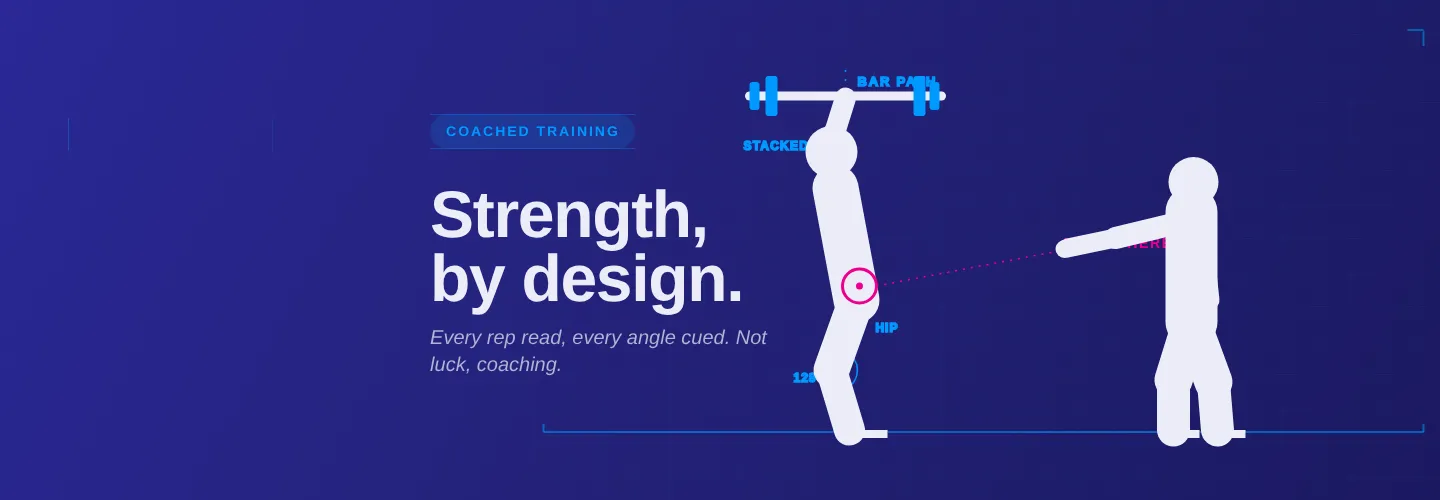
A coach looks at how you moved during the warm-up and changes the day before you touch the bar. Maybe it becomes four sets at 165 with a different grip. Maybe it becomes a lower-body day entirely. You still train, you still progress, and you do not accumulate the small injuries that end most self-directed programs around month four.
Coach Ivan, who has been coaching at Pittsburgh FIT for years, describes the job less as teaching exercises and more as making thousands of small decisions on someone's behalf so they never have to wonder whether today counts.
Because a solo workout is a promise you made to yourself, and you have already proven you will break those quietly.
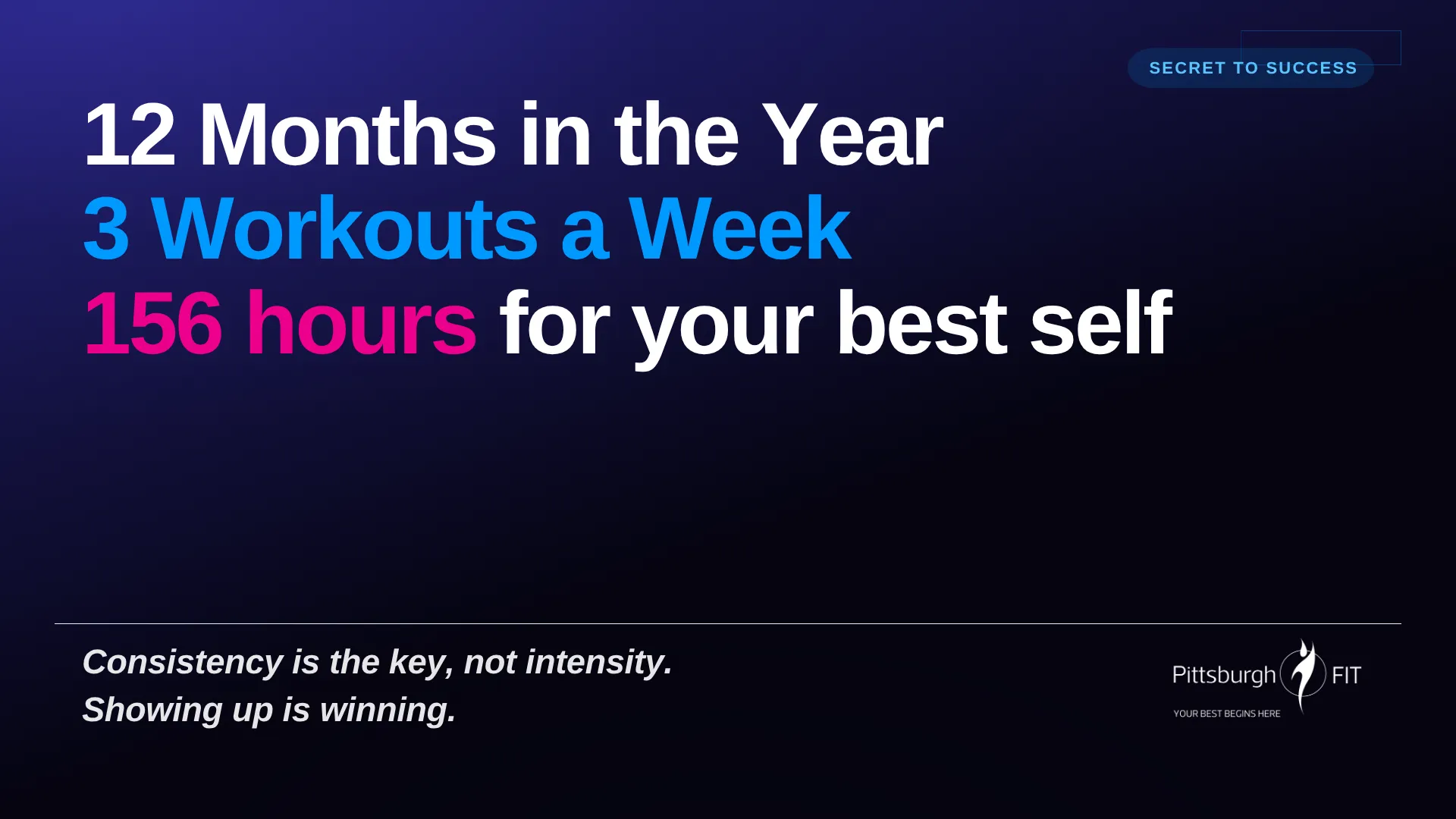
Look at the arc honestly. Weeks one through three are great, because novelty does a lot of work. Weeks four through six are fine. Somewhere in week seven a genuinely busy stretch arrives, you miss two sessions, and the program stops being a streak you are protecting. Once it is no longer a streak, there is nothing structural holding it up, and it quietly becomes something you used to do.
Nothing about that sequence is a character flaw. It is what happens to any commitment with no external anchor.
A coached session has an anchor. Someone has your name on their schedule for 6am Wednesday. They wrote your session last night. They will notice if you are not there, and they will text you, and you know that in advance. That single fact changes the math on a hard morning more than any amount of self-talk.
We wrote a full piece on this cycle in Why Do You Keep Starting Over With Fitness? if you want the longer version.
It is closer to the opposite. The further you are from confident in a gym, the more the coaching is worth, because you are the person carrying the most risk and the most doubt.
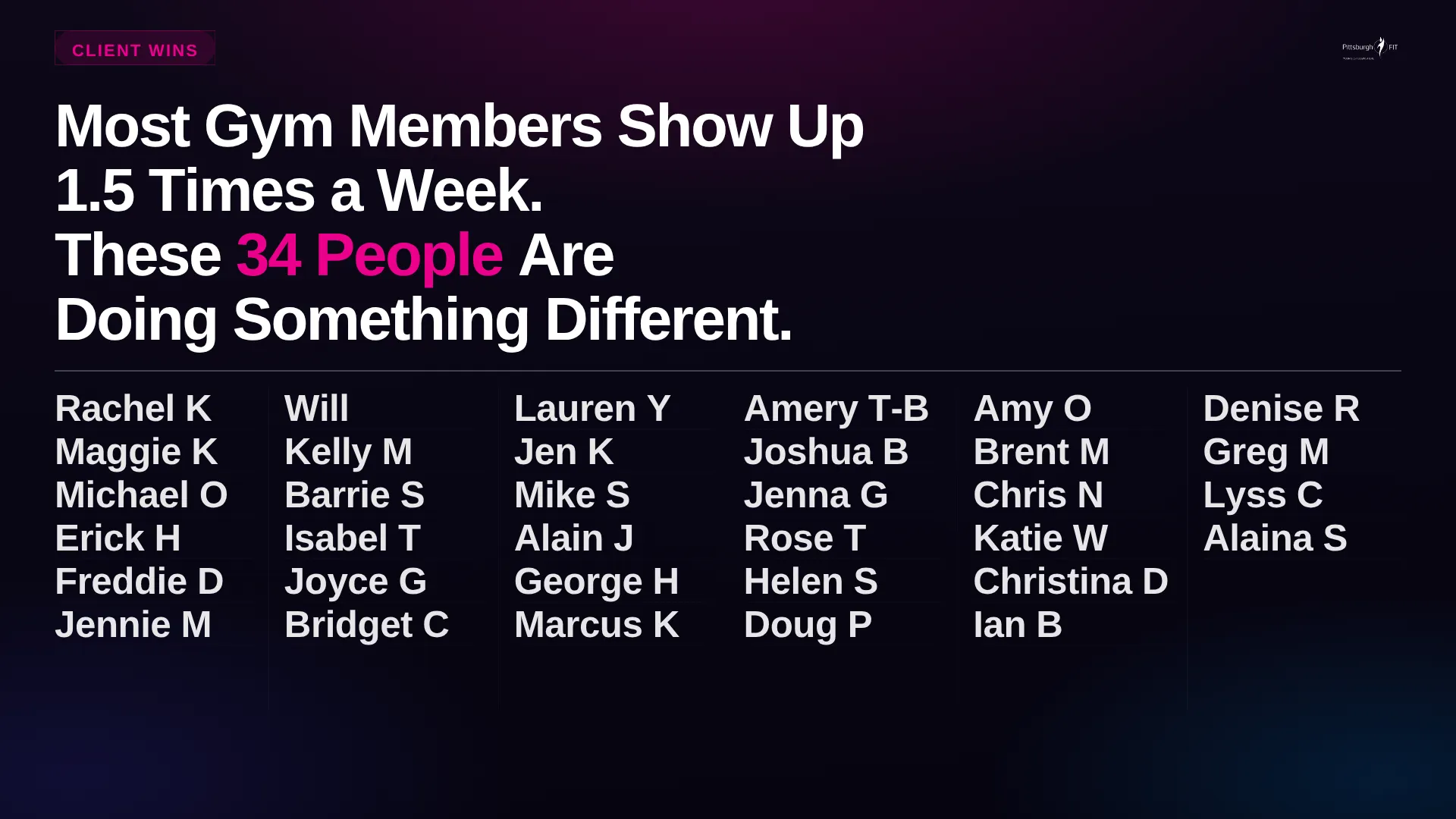
Consider where people actually start with us. Maurice came to Coach Corey to get movement into a desk-heavy workday. His deadlift at the beginning was 75 pounds. Two years in, he pulls 215. Pete started with Coach Erika squatting a 35 pound kettlebell and now squats 215 for reps.
Those are not athlete starting points. They are ordinary starting points, and both of those people would have been the most self-conscious person in a crowded class on day one. In a one-on-one session there is no crowd to be self-conscious in front of.
Pittsburgh FIT is at 210 Thomas St, right on the Wilkinsburg edge of Pittsburgh's East End, and a meaningful share of the people who walk in have not trained seriously in a decade. That is normal here. Nobody is watching your first set.
This is where coaching stops being a convenience and starts being the whole point. A written program does not know about your knee.
Ameet, a CMU professor who trains with Coach Geremy, was active for years through basketball, swimming, and lifting, but had chronic knee and shoulder pain that kept sending him back to physical therapy. After training with structured progressions, he squats below parallel with zero knee pain for the first time in years and presses overhead without shoulder pain. His wife Ginger joined after seeing how quickly it worked.
Hy, a physician and competitive cyclist working with Coach Jami three times a week, came in with chronic knee and back pain limiting his riding. The work focused on posture, mobility, and positional stability, strengthening glutes, hamstrings, and hips. The pain resolved and his cycling power improved substantially.
Neither of those outcomes comes from a phone app. They come from someone watching you move, week over week, and adjusting the plan around what they see.
It looks boring, which is exactly why it works and exactly why people abandon it on their own.
Progressive overload means the demand goes up in small, deliberate increments that your body can actually absorb. Five more pounds. One more rep. A slightly harder variation. Done consistently for two years, that turns a 75 pound deadlift into a 215 pound deadlift, which is the least dramatic and most reliable thing in fitness.
The reason people cannot do this alone is not that the concept is hard. It is that self-directed training tends to swing between two errors: doing the same weight for months because it feels safe, or jumping too far too fast on a day you feel good and paying for it the following week. A coach holds the line in the middle, where the boring progress lives.
Answer one question honestly. Over the last three years, how many times have you started something and stopped within eight weeks?
If the answer is zero, you probably do not need us, and we will tell you that. Some people are genuinely well served by a good program and their own discipline, and there is no reason to sell them something else.
If the answer is two or more, the missing piece was never the plan. You have had good plans. What you have not had is a person, a fixed appointment, and someone adjusting the work to the life you actually live rather than the life the program assumed.
On the price question, most people who say a coached program is too expensive are not actually objecting to the number. They are objecting to the risk of spending it and having nothing change again. That is a fair fear and it is worth naming out loud rather than arguing with.
Part 3 puts the two halves together into something you can actually run this fall, including how to pick the hour, how to define what six months from now looks like, and what to do in the next two weeks before your calendar closes.
Read Part 3: How Do You Build a Fall Fitness Plan Before Life Gets Busy?
How often do I need personal training to see results?Two sessions a week is the most common starting point and produces steady progress for most people. One session a week works if you are also training independently and want technique oversight and programming. Three or more suits people with performance goals, injury history, or a short timeline.
Is personal training better than group fitness?They solve different problems. Group fitness is excellent for energy, community, and cost, and it works well once you already move confidently. Personal training is better when you are starting over, working around pain, or need a fixed appointment with someone who knows your history to stay consistent.
Can I do personal training if I have never lifted weights before?Yes, and that is the ideal time to start. Beginners get the most value from coaching because technique gets built correctly the first time instead of corrected years later. Many of our clients began with a kettlebell they could barely move and progressed to loaded barbell work.
How long before I see results from personal training?Most people notice energy, sleep, and daily movement changes within three to four weeks. Visible body composition change usually takes eight to twelve weeks with nutrition alongside it. Strength numbers move fastest, often within the first month, because early gains come largely from coordination.
Is personal training worth the cost compared to a gym membership?It depends on what has failed before. A membership is far cheaper and works if you consistently use it. If you have paid for memberships you stopped using within two months, the cheaper option has already cost you more, because it produced nothing.

.webp)
.webp)
.webp)
.webp)
.webp)





.webp)

.webp)




.webp)


.webp)
.webp)


.webp)
.webp)
.webp)
.webp)
.webp)
.webp)
.webp)
.webp)
.webp)
.webp)
.webp)
.webp)
.webp)
.webp)
.webp)
.webp)
.webp)
.webp)
.webp)
.webp)
.webp)
.webp)
.webp)
.webp)
%2520(1).webp)
.webp)
.webp)
.webp)
.webp)
.webp)
.webp)
.webp)
.webp)
.webp)
.webp)
.webp)
.webp)
.webp)
.webp)
.webp)

.webp)
.webp)
.webp)
.webp)
.webp)
.webp)
.webp)
.webp)
.webp)
.webp)
.webp)
.webp)
.webp)
.webp)
.webp)
.webp)