.webp)
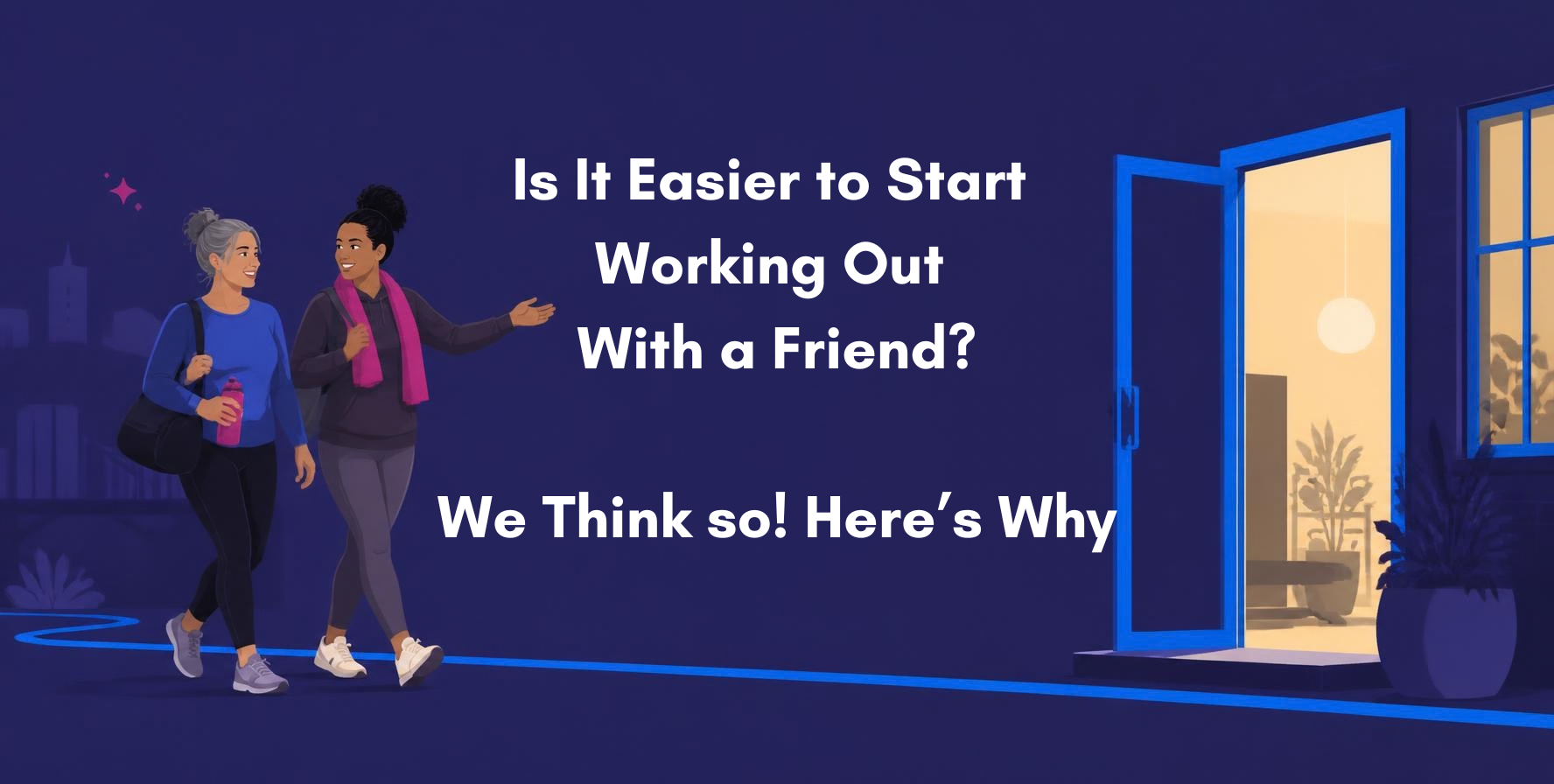
Most advice about training for a fitness event quietly assumes you are doing it alone. Solo pacing, solo strategy, solo suffering. But a huge share of people entering these events now do it in pairs, and the entire calculation shifts when there are two of you.
Training for a partner event means building your own base individually, then practicing the handoffs, pacing, and work-splitting together in the last few weeks. Pick a partner based on reliability rather than fitness level. A gap in ability is a strategy problem, not a dealbreaker, and it is usually solvable by dividing the work unevenly on purpose.
Here is how that actually plays out.
Reliability beats fitness, and it is not close.
The best partner is the person who will actually show up to train, answer a text about scheduling, and not bail three days out. That is the whole list. Their squat number is nearly irrelevant by comparison.
People get this backwards constantly. They hunt for the fittest person they know, then spend eight weeks feeling like a burden, or they end up with a partner who is stronger but flaky and now they are training alone anyway.
A few things genuinely matter. Pick someone whose schedule overlaps with yours at least once a week, because you will need some shared sessions near the end. Pick someone you can be honest with when something hurts or a plan is not working. And pick someone who wants this roughly as much as you do, because mismatched motivation is the thing that actually sinks partnerships.
One of our members, Brian McGuirk, came to Pittsburgh FIT because his wife Caitlin was already training with Coach Corey and told him how fun and hard the workouts were. They both train with Corey now. That is the pattern more often than not. Partnerships tend to start with one person pulling the other in.
Then you split the work unevenly, on purpose, and you both stop pretending otherwise.
This is the single most common worry we hear, and it comes almost entirely from people who think a partner format is supposed to be an even fifty-fifty split. It is not. In most partner formats, including HYROX doubles, you are free to divide the running and the stations however you want. That flexibility exists precisely because pairs are rarely evenly matched.
So use it. If your partner is a stronger runner, they take more of the running. If you are better under load, you take more of the carries and the lunges. You are optimizing a team result, not proving something individually.
The mental part is harder than the tactical part. If you are the less fit half, the story in your head will be that you are holding them back. Say that out loud early to your partner and then let it go, because the version of this that ruins partnerships is the one nobody discusses. Almost every stronger partner we have coached is genuinely just glad to be doing it with someone.
Think of it in two phases.
Weeks one through six or so: train separately, build your own base.
There is no partner-specific magic here. You need general strength, some aerobic capacity, and practice with the specific movements the event demands. Squat, hinge, carry, push, pull, and the ability to keep going when your legs are tired. If you want the detailed weekly structure for HYROX specifically, we broke that down in its own post.
Training separately in this phase is fine and usually necessary. Your schedules will not line up perfectly, and that is not a problem yet.
The last three or four weeks: train together at least once a week. This is where the partnership actually gets built, and it is the part people skip.
You are practicing three things. Transitions, meaning the physical handoff and how much time you lose to it, which is always more than you think. Pacing, meaning what happens to your effort when you know someone is waiting on you. And communication, meaning the short specific phrases you will use when you are too tired for full sentences.
That last one sounds small and is not. Working out a simple signal for "I need you to take more of this" ahead of time, when you are both calm and fresh, is worth more than any amount of extra conditioning.
It makes you more consistent, and consistency is what makes you fitter.
The mechanism is not mysterious. It is much harder to skip a 6am session when someone is standing in the parking lot waiting for you. Shared commitment converts individual motivation, which fluctuates wildly, into a social obligation, which is far more stable.
There is a second effect that shows up in the training itself. Most people work slightly harder with someone beside them than they do alone, not because of competition but because effort is contagious and because stopping is more conspicuous.
The tradeoff worth naming honestly: partner training can also become a way to socialize instead of train. If your sessions have gotten pleasant, that is a signal to add structure or bring a coach in.
Then come alone and get paired up, which is more common than people assume.
At Pittsburgh FIT, roughly half the people who ask about partner events do not arrive with someone. Coaches match people up on the day based on pace and comfort level. It works, and it works surprisingly often as a way to meet people you would not otherwise have met at a gym in the East End.
If pairing up with a stranger sounds worse than not going, that is worth examining. The discomfort is usually anticipatory and rarely survives the first ten minutes.
It is the fastest way to close a gap when you have a fixed date.
Group classes build your general base well. But if you have eleven weeks and one specific weakness, whether that is grip, running mechanics, or lunging under load, one session a week with a coach who watches your form is worth more than three extra unstructured workouts.
That is what personal training is actually for at this stage. Not a beginner on-ramp, but targeted work on the thing standing between you and the result you want. We wrote separately about what a personal trainer actually does during a session if you want the honest version.
For a partner event specifically, there is a version of this worth considering: both partners doing a session together. It lets a coach see how you move as a pair and fix the handoffs directly.
Next in this series: whether there is an age at which this stops being for you. The answer involves a 72-year-old ER doctor and 71 burpees.
How do you pick a partner for a HYROX doubles or partner event?
Choose based on reliability rather than fitness. The right partner shows up to training, communicates about scheduling, and wants the goal roughly as much as you do. A difference in fitness level is manageable by splitting the work unevenly, but a partner who cannot commit to training is not.
What happens if my partner is much fitter than me?
You divide the work unevenly on purpose. Most partner formats let you split running and stations however you choose, which exists precisely because pairs are rarely matched. The stronger partner takes a larger share of whatever they are better at. Discuss it openly early rather than letting it go unspoken.
Do partners need to train together every session?
No. Build your individual base separately for most of the training block, then train together at least once a week in the final three or four weeks. Those shared sessions are for practicing transitions, pacing, and communication, which are the things that actually separate prepared pairs from unprepared ones.
Can I do a partner event if I do not have a partner?
Yes. Most partner events, including the one at Pittsburgh FIT, will pair you with someone on the day. Coaches match people by pace and comfort level. Showing up alone is common enough that it is a standard part of how these events run, not an exception.
Is training with a partner better than training alone?
It tends to produce better consistency, which matters more than any single workout. A shared commitment is harder to skip than a private intention. The tradeoff is that partner sessions can drift toward socializing, so adding structure or a coach helps keep the training honest.



.png)


.png)


.webp)
.webp)
.webp)
.webp)





.webp)

.webp)





.webp)


.webp)
.webp)



.webp)
.webp)
.webp)
.webp)
.webp)
.webp)
.webp)
.webp)
.webp)
.webp)
.webp)
.webp)
.webp)
.webp)
.webp)
.webp)
.webp)
.webp)
.webp)
.webp)
.webp)
.webp)
.webp)
.webp)
%2520(1).webp)
.webp)
.webp)
.webp)
.webp)
.webp)
.webp)
.webp)
.webp)
.webp)
.webp)
.webp)
.webp)
.webp)
.webp)
.webp)

.webp)
.webp)
.webp)
.webp)
.webp)