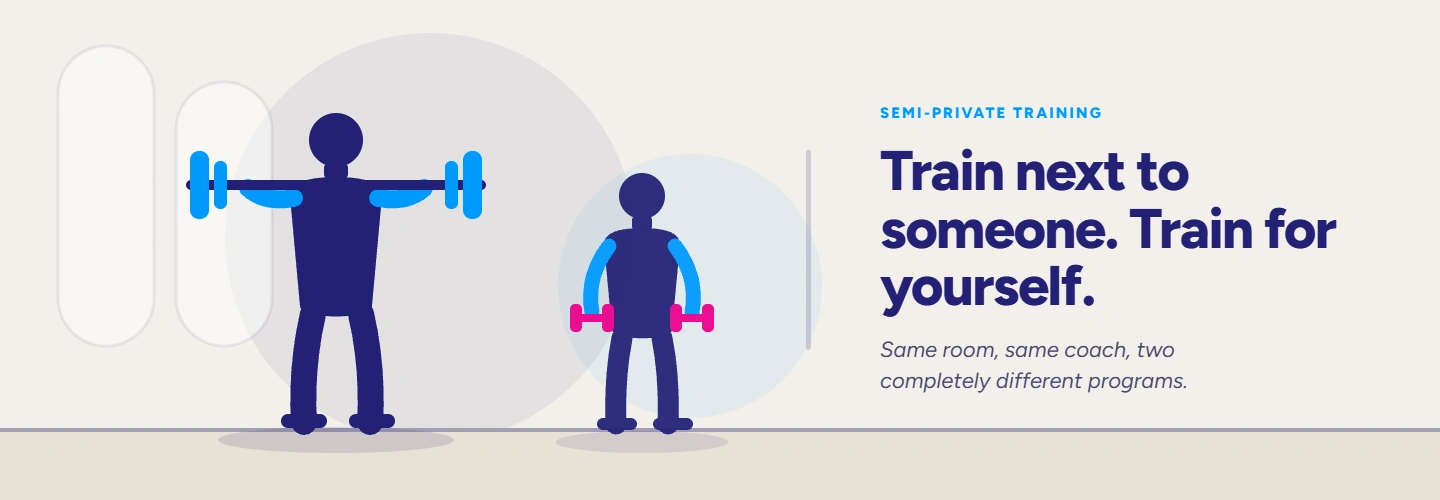
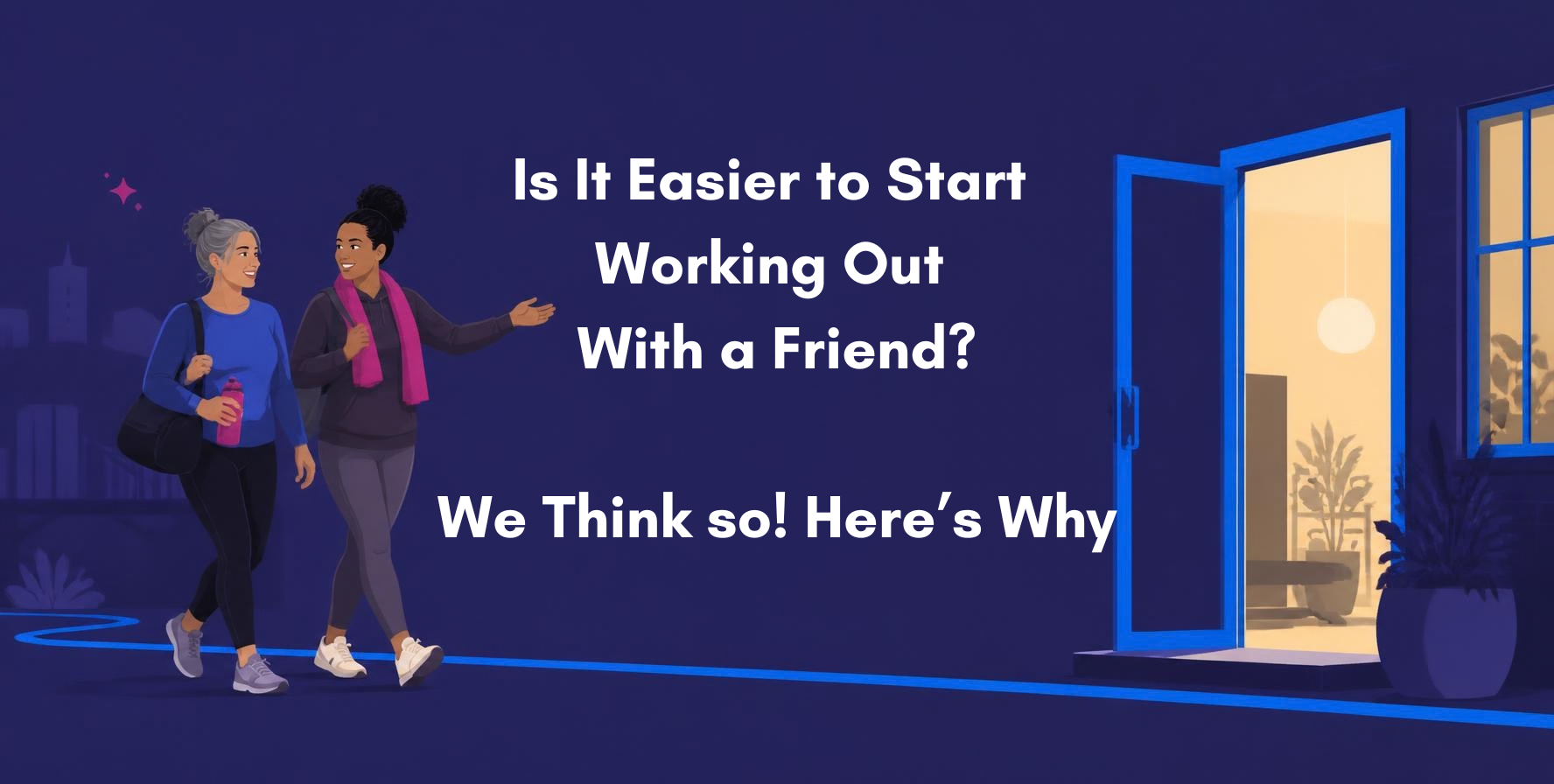
You've asked. Maybe more than once. They said they'd think about it, or that they'd start after work slows down, and nothing happened. Meanwhile you're going alone and quietly wishing you weren't.
Here's the honest answer: you probably can't talk your partner into training, and trying usually makes it less likely. What works is getting visibly better yourself. When someone close to you watches your energy, mood, and capability change over months, that does the convincing. Most people who train alongside a partner never recruited them at all.
That's not a nice sentiment. It's the pattern we watch play out at Pittsburgh FIT over and over.
Because an invitation to the gym isn't heard as an invitation. It's heard as an evaluation.
When you ask someone to start training, they hear a comment about their current body, their discipline, or how they've been spending their time. Even when you don't mean it that way. Especially if they've tried before and quit, which most adults have. You're not opening a door for them, you're reminding them of a door they already walked away from.
So they deflect. Work is busy. Their knee is bad. Maybe in January. And the more you push, the more the whole subject becomes something to avoid, because now it's loaded.
Coach Erika has seen this dynamic more times than she can count. The members who end up training with a spouse almost never got there by asking. They got there by becoming someone whose results were impossible to ignore.
Watching the change happen to someone they live with, over a long enough stretch that it stops looking like a phase.
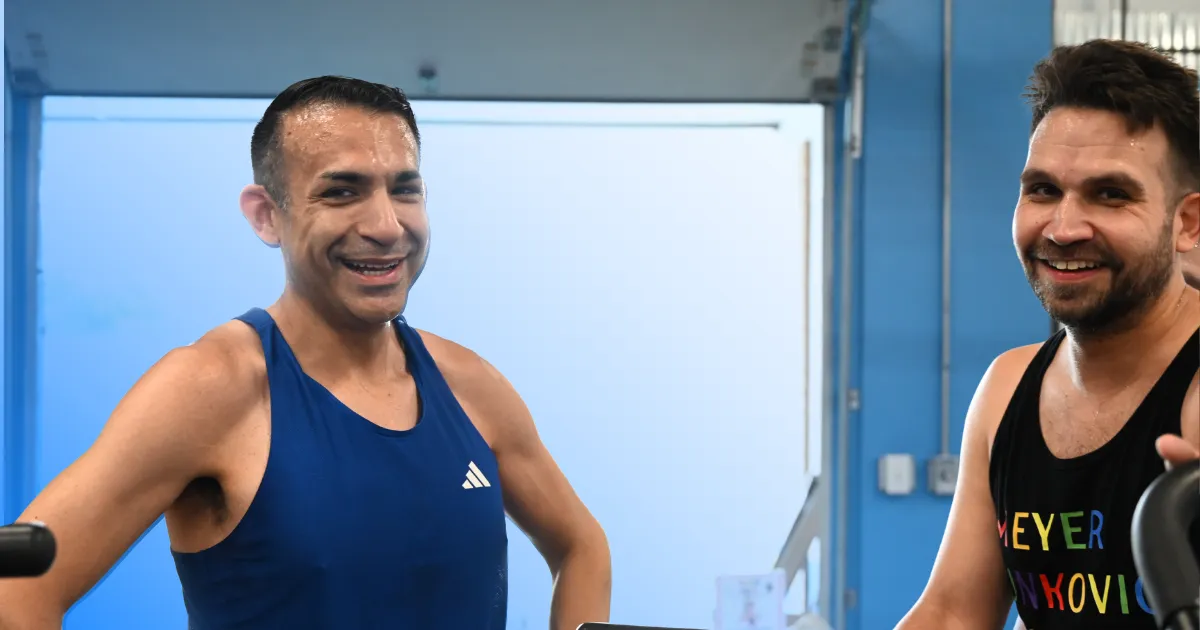
Ameet is a good example. He's a college professor at CMU and a dad of two young girls, and he came to us with knee and shoulder problems that had already sent him to a physical therapist more than once. He wasn't trying to inspire anybody. He wanted to stop hurting.
A little over a year in, his knees let him squat below parallel without pain for the first time in years. He hit a 200 pound bench press PR and is now chasing 225. He presses ten reps at 135 on the incline, pain free, which is remarkable given that his shoulder was the thing that wouldn't cooperate when he started. And by his own count, this is the longest stretch he's ever gone without an injury. Not the longest since he joined. The longest of his life.
His wife Ginger watched all of that happen from the inside. Nobody pitched her. She signed up on her own, and she's now benching 85 with Coach Erika alongside him.
The mechanism here is not motivation. It's evidence. Ginger didn't need a sales pitch because she had a year of daily proof sitting across the dinner table.
Longer than you want, and less time than you fear. Figure in months, not weeks.
The first thing people close to you notice usually isn't your body. It's your mood and your energy. You stop dragging through the evening. You sleep better. You're less irritable on Sunday nights. Those changes are visible to a spouse well before any change in how you look, and they're far more persuasive, because your partner doesn't want your deadlift. They want to feel better.
Somewhere around the six month mark, the physical stuff starts showing up in ways that are hard to explain away. Clothes fit differently. You carry things without asking for help. You do something on vacation you would have skipped two years ago.
That's the window where partners start asking questions instead of making excuses. Your job in the meantime is to keep going without commentary.
Mostly, yes. Say it once, clearly, then let it go and let your training do the talking.
There's a version of this that isn't nagging. You can say, one time, that you'd love to do this together and that the invitation stays open with no expiration date. Then you drop it completely. No progress reports designed to guilt them. No leaving the gym schedule on the counter. No "you know, this would really help your back."
What you can do is keep the door genuinely easy to walk through. Don't make joining you require a big declaration. When they eventually express curiosity, the correct response is a low-key "want to just come see it?" rather than an enthusiastic pounce, which will send them right back out the door.
The gap between an ability difference matters less than people think, too. If you're worried your partner would be embarrassed training next to you, that's a programming question with an easy answer, not a reason to wait.
Then you train anyway, and you find your partner somewhere else.
This is the part people skip. Not every couple ends up training together, and that's a completely normal outcome. Some households need the gym to be the one thing that belongs to one person. Some partners genuinely prefer hiking, or the pool, or nothing at all.
The mistake is treating your partner's participation as a prerequisite for your own. We've watched people stall for years waiting to start together. Meanwhile the version of you who trains for those years is the same version most likely to eventually bring them along.
And if what you actually want is a training partner rather than specifically your spouse, a coached gym solves that without any negotiation at home. Our members find partners in class, in the 6am crowd, at events. At our partner events, anyone who signs up without a partner gets paired with someone. You do not have to arrive with a person in hand.
That's usually the real objection hiding under the schedule excuse, and it's the most solvable one.
Ameet started training because of joint pain, not after resolving it. The knee work came first: knee-specific movements, hip and ankle stabilization, the unglamorous stuff that makes a joint feel supported rather than exposed. The bench press PR came later, and it came because the foundation was built around the problem instead of ignoring it.
If your partner's hesitation is a bad shoulder or a knee that's been cranky since 2019, that's not a reason to stay out. It's the reason to work with a coach rather than guessing on your own. Coach Erika builds around this constantly at our facility on Thomas Street.
You cannot argue someone into caring about their health. You can only become a walking argument.
Go train. Let it work. Say nothing about it. The people close to you are paying more attention than they let on, and eventually one of them is going to ask what you've been doing.
How do I get my husband or wife to work out with me?
Stop asking and start training consistently yourself. Partners are persuaded by visible change in your energy, mood, and capability over months, not by invitations. Make the offer once, keep it open with no pressure, and let your own results do the convincing over time.
Is it better to work out with your spouse or separately?
Both work. Training together adds accountability and shared time, but it isn't required for either person to succeed. Some couples do better keeping the gym as individual space. The bigger mistake is postponing your own start while waiting for your partner to be ready.
What if my partner and I are at completely different fitness levels?
A difference in ability is a programming problem, not a barrier. A coach can scale the same session so two people work at appropriate intensity side by side. At partner events, the work gets divided unevenly on purpose so both people contribute what they realistically can.
Can I do a partner fitness event if I don't have a partner?
Yes. At Pittsburgh FIT's partner events, anyone registering solo gets paired with another participant. Showing up without a partner is common and it's planned for, so a missing teammate shouldn't keep you from signing up.
My partner has an old injury. Should they wait until it heals?
Usually not. Persistent joint pain rarely resolves through rest alone, and coached strength work built around the problem often improves it. Members have started training specifically because of knee and shoulder pain and ended up with their longest injury-free stretch in years.



.png)


.png)


.png)


.webp)
.webp)
.webp)
.webp)
.webp)





.webp)

.webp)





.webp)


.webp)
.webp)


.webp)
.webp)
.webp)
.webp)
.webp)
.webp)
.webp)
.webp)
.webp)
.webp)
.webp)
.webp)
.webp)
.webp)
.webp)
.webp)
.webp)
.webp)
.webp)
.webp)
.webp)
.webp)
.webp)
.webp)
%2520(1).webp)
.webp)
.webp)
.webp)
.webp)
.webp)
.webp)
.webp)
.webp)
.webp)
.webp)
.webp)
.webp)
.webp)
.webp)
.webp)

.webp)
.webp)