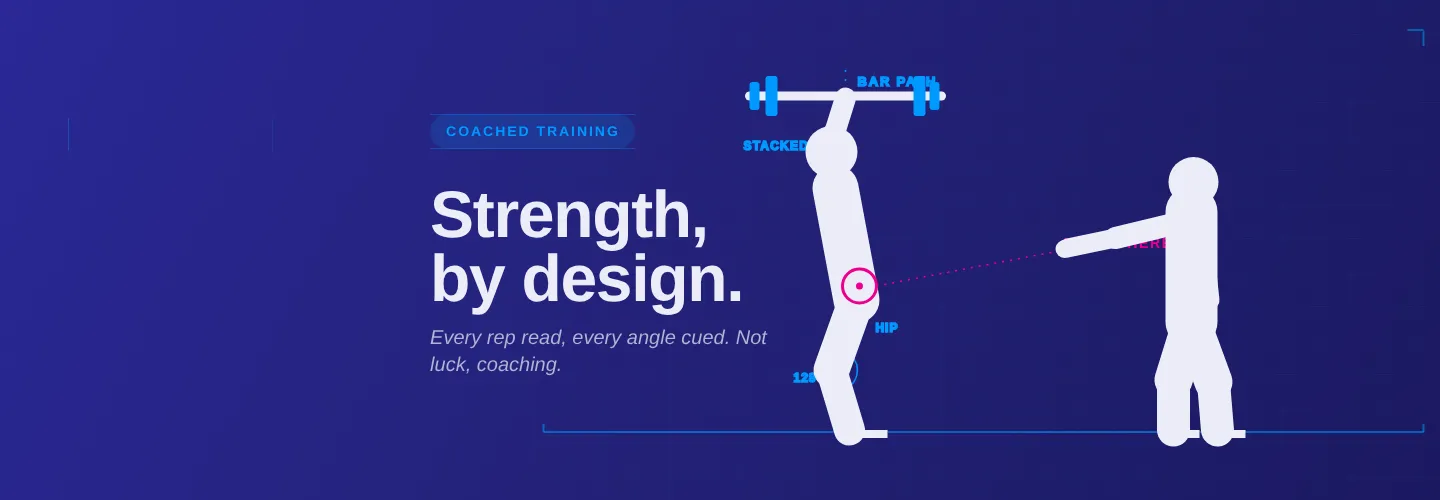
For someone who has never worked with one, personal training is a bit of a black box. You picture a person with a clipboard counting your reps and telling you to push through it, and you reasonably wonder whether that is worth several hundred dollars a month.
Here is the direct answer. A personal trainer builds a training plan specific to your body, your schedule, and your goals, then coaches you through each session in real time. They select the exercises, manage how much weight and volume you handle week to week, correct your technique as you move, and adjust the plan when your life or your body changes.
The counting is the smallest part of the job. What you are actually paying for is the decision-making.
What Happens During an Actual Personal Training Session?
The hour has a shape, and it is more deliberate than it looks from the outside.
Your coach starts by asking how you are. Not as small talk. They want to know how you slept, whether the soreness from last session cleared, if your back is still bothering you, and how the week has gone. That information changes what happens next.
Then comes a warm-up built for the specific work you are about to do, not a generic five minutes on a bike. From there you move into the main lifts, where your coach is watching your positions, giving you one or two cues at a time, and deciding in the moment whether to add weight, hold steady, or pull back. After that, accessory work targeting whatever is weak, tight, or lagging. Then a few minutes at the end to tell you what is coming next time and why.
You leave knowing what you did and what it was for. That last part is what separates coaching from supervision.
Do Personal Trainers Just Count Your Reps?
No. Counting is what a coach does with a small part of their attention while the rest is occupied with things that are much harder to do for yourself.
They are watching where your knees track and whether your ribs stay down. They are noticing that your left side is doing less work than your right, which you cannot see and would not feel. They are deciding whether that grinding third rep means you have one more in you or means today is a three-set day instead of a five-set day.
Our coaches have specialized in rehab and pain reduction at Pittsburgh FIT since 2013, and we came to it honestly after navigating serious pain of his own more than once. That kind of experience shows up as the ability to look at a movement that feels fine to you and see the thing that is going to hurt in eight weeks.
That is the actual product. Not encouragement. Judgment.
How Does a Trainer Decide What You Should Be Doing?
They start with what you want and work backward through what your body can currently handle.
The first conversation covers your goals, your training history, your injuries, and honestly, how many hours a week you can commit without lying to yourself. A coach then builds a progression, which is a plan for how the work gets harder over time in a way your body can absorb.
This is the piece that is genuinely difficult to do alone. Progressive overload is simple as a concept and unforgiving in practice. Add too little and nothing changes. Add too much and you are hurt in a month. The coach's job is to sit in that narrow band for months on end, tracking numbers across sessions so that the version of you in December is meaningfully stronger than the version in July.
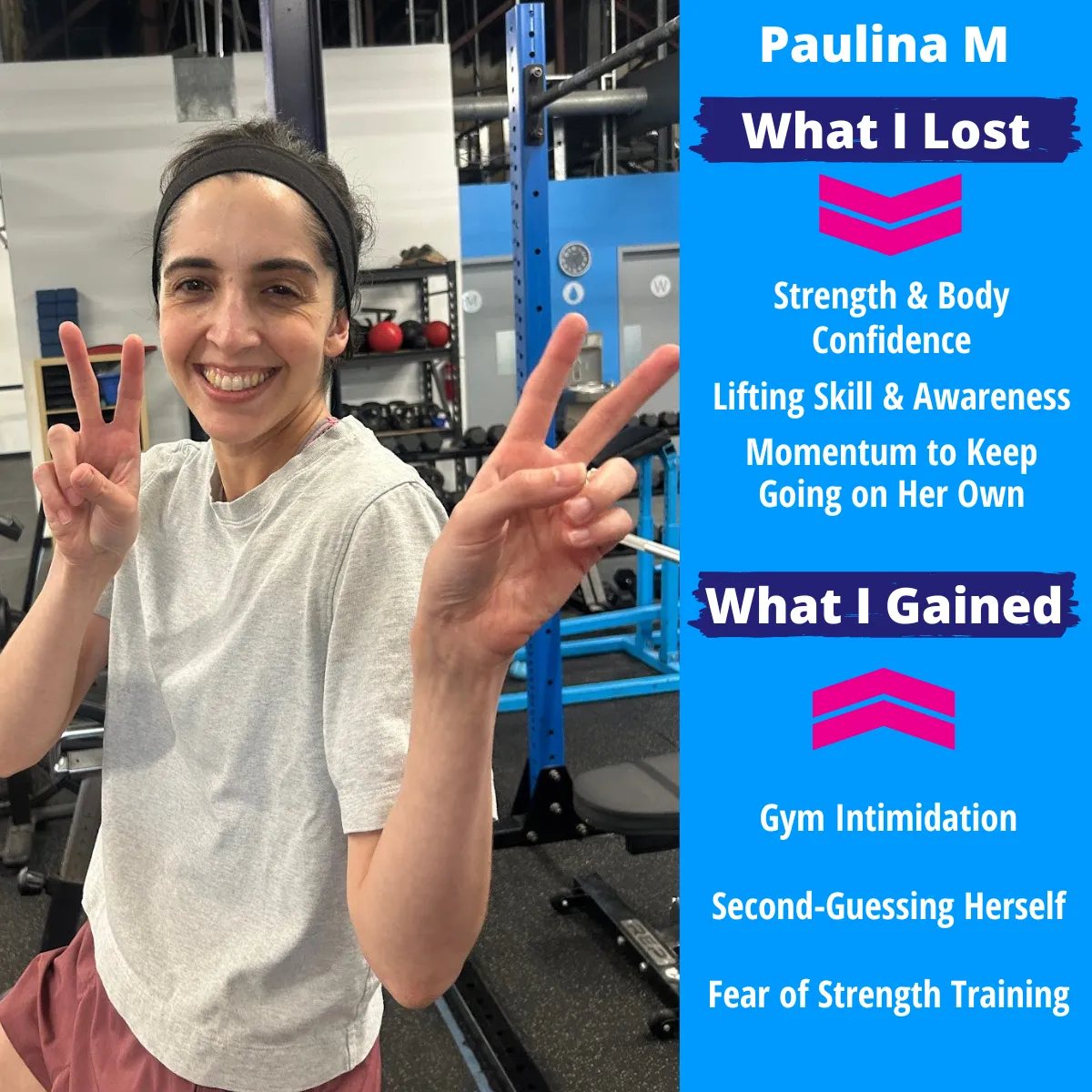
Paulina came to Pittsburgh FIT new to the city, new to lifting, and interested in learning to train safely rather than guessing. She works with Coach Grace once a week. She started with dumbbells and bands and has progressed to barbell work, building a strength foundation from nothing. Randy came in active through volleyball but without an organized routine, and worked with Grace through rows, ring rows, and negatives until he went from zero pull-ups to four unbroken, plus a 30 second handstand hold he could not do at all when he started.
Neither of those outcomes came from working harder. They came from working in the right order.
What Does a Good Trainer Do When You Show Up Tired or Hurt?
This is the question that separates a good coach from an app, and it is the reason coached clients stay consistent for years.
You will have weeks where you slept five hours, traveled, ate badly, and arrived at your session with nothing in the tank. A written program does not know that. It tells you to hit the same numbers regardless, you fail, and you leave feeling like you are going backward. Two or three of those and people quit.
A coach looks at you and changes the day. Maybe the heavy work becomes moderate work. Maybe you spend more time on positions and less on load. Maybe you do something genuinely easier and you still leave having trained.
That flexibility is what prevents the all-or-nothing collapse that ends most fitness attempts. It is not lowering the bar. It is the difference between a plan that survives your actual life and one that only works when everything goes right.
Do You Have to Be Fit Before You Hire a Personal Trainer?
No, and this is probably the most common reason people delay for years.
There is a widespread belief that you should get in shape enough to not embarrass yourself, and then hire a coach. That is backward. The period when you know the least and are at the highest risk of hurting yourself is exactly when good coaching is worth the most.
Nobody at Pittsburgh FIT is going to be surprised by where you are starting. Our coaches spend their days with people at every possible level, from a middle schooler working on core strength to a 71 year old ER doctor doing burpees on his birthday. Gianfranco Frattelli, our newest coach, has been the guy who was overweight and the guy training around an injury, so when someone tells him they are nervous, he is not guessing at what that feels like.
The starting line is not a qualification. It is just where you happen to be standing.
Is Personal Training Only for People With Big Goals?
Not remotely. Most of our long-term personal training clients came in with goals that sound almost small when you say them out loud.
Get some movement into a desk-heavy week. Handle the stairs without thinking about it. Be able to lift the dog. Stop having a back that goes out twice a year. Keep up on a hike. Feel less like the tired one.
Those are the goals that hold up over four years, which is roughly how long our clients stay once they commit. Big dramatic goals tend to burn out with the motivation that produced them. Practical ones just quietly get met, and then get replaced by slightly bigger ones.
This is Part 2 of a three part series on why coaching works when willpower does not. Part 3 takes on the question everyone is actually weighing, which is whether the cost is worth it after 40.
------------------------------------------------
FAQ
What does a personal trainer actually do during a session?
A trainer runs a warm-up built for that day's work, coaches you through your main lifts while correcting technique in real time, decides how much weight and volume you handle, and adds accessory work for your specific weak points. They also adjust the session based on your sleep, stress, and soreness.
Do I need to be in shape before hiring a personal trainer?
No. The period when you know the least about training is when coaching is worth the most, because that is when injury risk and wasted effort are highest. Coaches at Pittsburgh FIT work with complete beginners every week, including people who have never touched a barbell.
How is personal training different from following a workout app?
An app cannot see you move, cannot tell that one side is compensating, and cannot change the plan when you arrive exhausted. A coach adjusts in real time and manages progressive overload across months, which is the part that actually produces long-term strength.
How often should you see a personal trainer?
Twice a week is the most common schedule for our long-term clients and is enough to drive steady progress for most working adults. Once a week works well when paired with group classes or independent training. Consistency over months matters far more than frequency.





.png)



.png)


.png)






.webp)
.webp)
.webp)
.webp)
.webp)





.webp)

.webp)







.webp)


.webp)
.webp)



.webp)
.webp)
.webp)
.webp)
.webp)
.webp)
.webp)
.webp)
.webp)
.webp)
.webp)

.webp)
.webp)
.webp)
.webp)
.webp)
.webp)
.webp)
.webp)
.webp)
.webp)
.webp)
.webp)
.webp)
%2520(1).webp)
.webp)
.webp)
.webp)
.webp)
.webp)
.webp)
.webp)
.webp)
.webp)

.webp)
.webp)
.webp)
.webp)
.webp)
.webp)