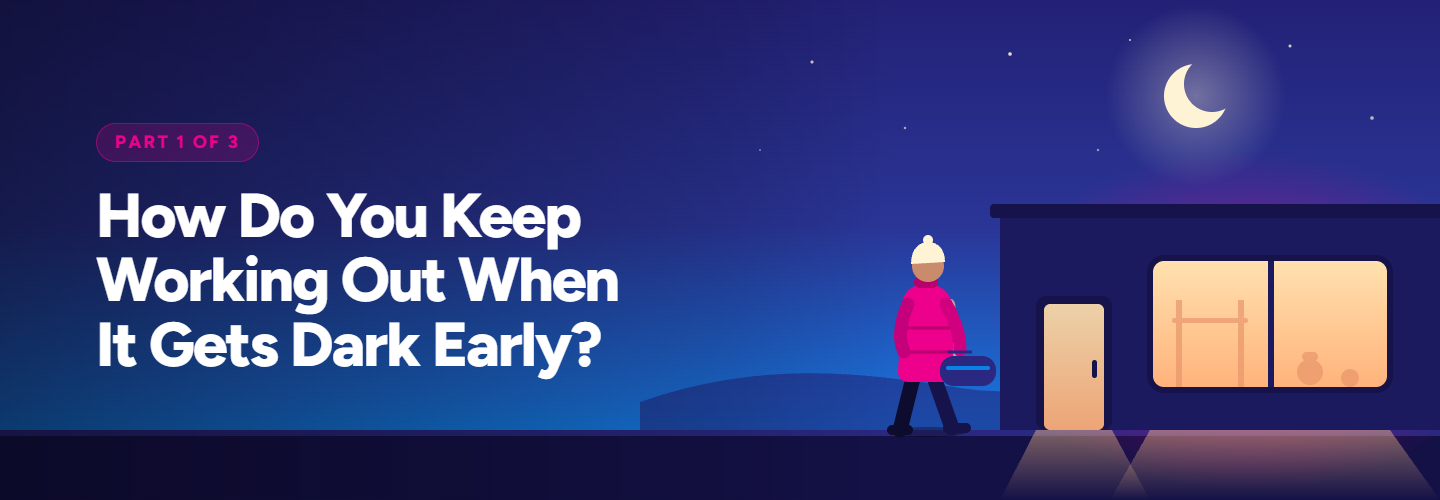
On Sunday, November 1, the clocks fall back. You get an extra hour of sleep, and then on Monday you walk out of work into what feels like the middle of the night. For a lot of people, that's the week a perfectly good routine quietly starts to slip.
To keep working out when it gets dark early, decide your workout days and times before the clocks change, then treat them like fixed appointments. Move some sessions to morning or lunch if evenings drain you, go straight from work instead of stopping home, and aim for two consistent sessions a week rather than an ambitious plan you can't keep.
Coach Jodi Butler has watched this play out every November since she opened Pittsburgh FIT in Pittsburgh's East End in 2013. This is Part 1 of a three-part series on getting through the dark months without starting over in January. Here's where it starts.
Because your body reads darkness as a signal to wind down. Light is the strongest cue your internal clock uses to decide when to be alert and when to get ready for sleep, and when the sun sets around 5 PM, that evening wind-down starts earlier too.
That's a big part of why 5:30 PM in November can feel like 9 PM in June. Nothing is wrong with you. Your body is responding to the light it's getting. Stack colder weather and a calendar that fills up fast between Halloween and New Year's on top of that, and of course your energy dips.
We dig into the science of this in Part 2, Why Do I Lose Motivation to Work Out in Winter? For now, the important part is this: if winter feels harder, that's normal. It just means you need a plan that doesn't rely on feeling like it.
Because they never actually decide to stop. Nobody sits down and says, I'm done until spring. What happens is quieter than that.
You leave work, it's already dark, the couch looks a lot more reasonable than it did in July, and you tell yourself you'll go tomorrow. Then tomorrow looks exactly the same. Three weeks later it's Thanksgiving, and the routine you had in October feels like something that happened to a different person.
The problem isn't discipline. It's timing. Every one of those skipped sessions got decided at 5:15 PM in a dark parking lot, at the exact moment your energy was lowest. That's the worst possible time to make a decision about your health, and it's when most people make it.
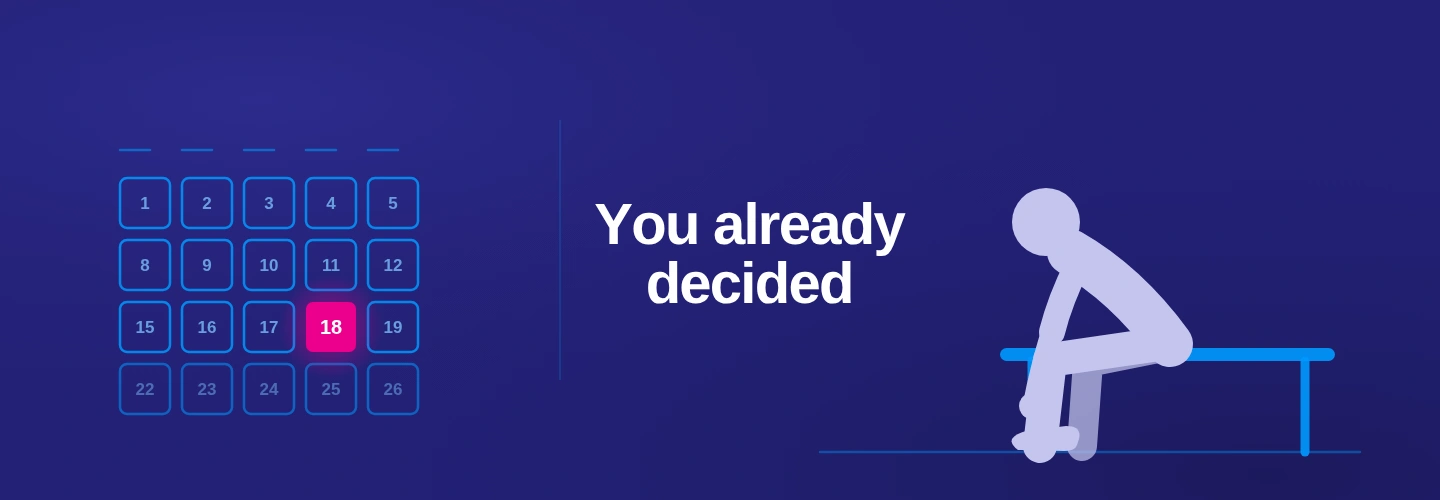
Pick your workout days and times now, before the first dark Monday. Not a vague goal like two or three times a week. Actual days and an actual hour, the same ones every week.
Put them on your calendar as recurring events through the end of February, the same way you'd block a standing meeting you can't move. When the decision is already made, the dark Monday doesn't get a vote. You're not deciding whether to go. You're just going to the thing that's on your calendar.
In Jodi's experience, the members who glide through winter aren't tougher than everyone else. They simply made their decisions earlier, while it was still light out and their energy was still good, and then they stopped renegotiating with themselves every evening.
Maybe, at least for some of your sessions. If evenings are where your energy falls apart, moving one or two workouts a week to before work or lunchtime can make the whole season easier.
Mornings come with a bonus in winter, too. Getting outside in the morning light, even for a ten-minute walk, is one of the simplest ways to help your body hold a steadier rhythm when the days get short. And lunch is often the most reliable daylight you'll see on a workday, which is why we're big fans of a midday walk. We put together a list of lunch-break walks in Pittsburgh's East End if you need ideas close to home.
That said, mornings aren't right for everyone. If you're truly not a morning person, or your mornings are already spoken for with kids and commutes, keep your evening sessions and protect them. The best time to train is the one you can repeat. Part 3 of this series lays out a few realistic winter schedules you can borrow.
Go straight from work. Stopping at home first is where good plans go to die, because once you sit down on the couch in a warm house, the dark parking lot gets a lot less appealing.
A few small things make a big difference. Pack your gym bag the night before and leave it in your car. Reserve your class or session ahead of time so someone is expecting you. And eat a real snack in the middle of the afternoon so you're not running on empty by 5 PM. Under-fueling makes everything feel harder, and it's also why so many people end up at the candy bowl instead of the gym. Coach Heather explains that connection in Why Do I Crave Candy More When I Skip Meals?
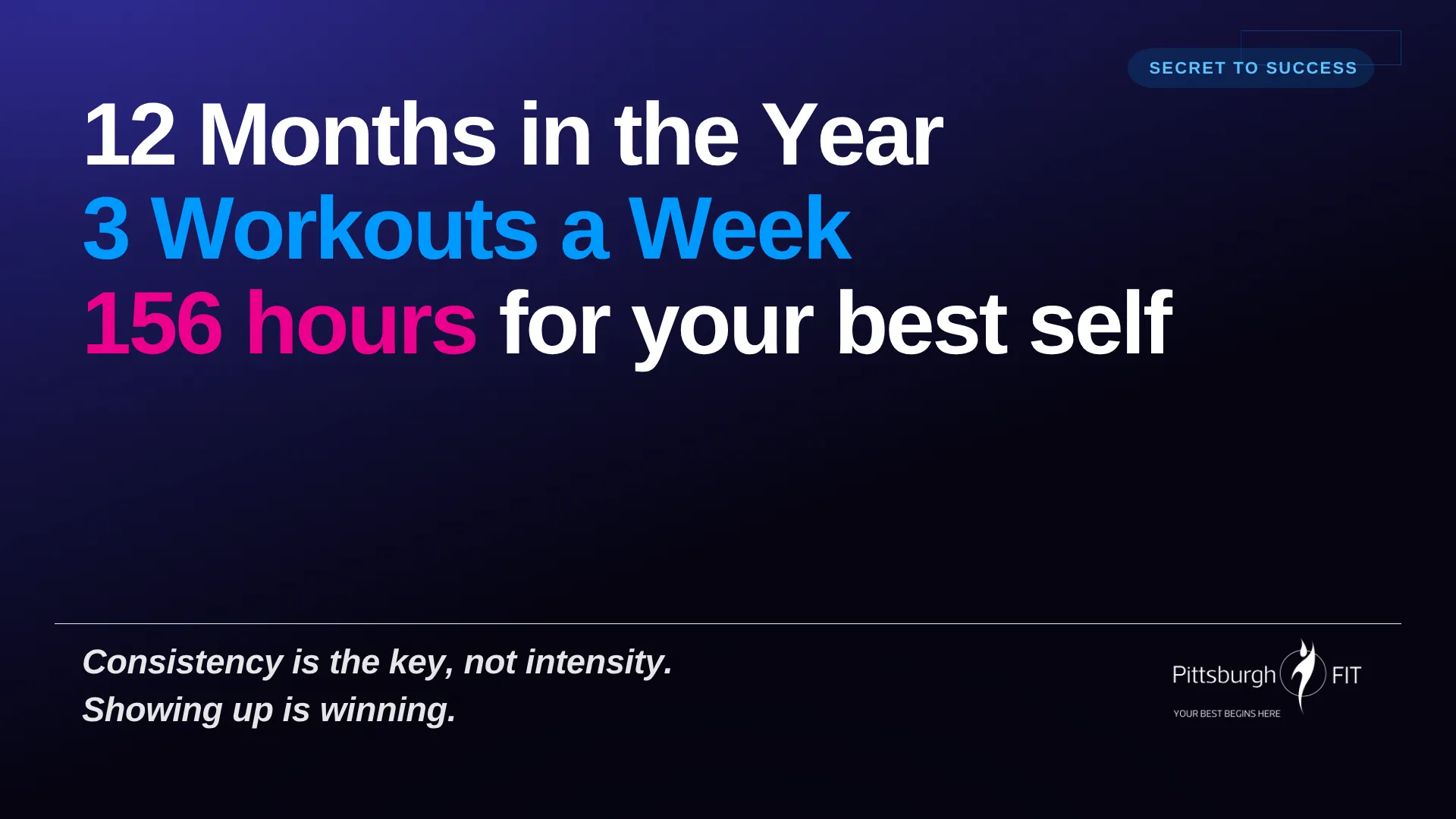
Two solid sessions a week is enough to hold onto your strength and keep the habit alive. It doesn't have to be four or five.
Consistency in November looks smaller than consistency in May, and that's okay. Two sessions a week through the darkest stretch of the year beats an ambitious plan that falls apart by Thanksgiving. If you want more movement on top of that, add short walks on your off days. They count more than you think.
The real payoff shows up in January. Instead of starting over with everyone else, you'll just be continuing. That's a very different feeling, and it's worth protecting.
Then pick your next session, not next Monday. You haven't undone anything by missing a week or two, and you don't need to make up for it.
Choose one day this week, put it on your calendar, and show up for that one. Then pick the next one. Restarting gets a lot easier when it's one session at a time instead of a whole new plan you have to launch on a perfect day that never comes.
If it feels like the winter slump hits you harder every year, keep reading. Part 2 explains why, and Part 3 shows you what a realistic winter schedule looks like.
Want an easy way to get moving before the clocks change?
Join us for our free Balance Clinic on Saturday, October 31 at 11 AM at Pittsburgh FIT, whether or not you train with us. Here's what to expect.
Save your spot: PittsburghFIT.com/Go
How do I stay motivated to work out when it gets dark early?
Don't rely on motivation. Decide your workout days and times before the clocks fall back, put them on your calendar as recurring appointments, and go straight from work instead of stopping home first. When the decision is already made, a dark evening has much less power to talk you out of it.
Is it better to work out in the morning in the winter?
For many people, yes, at least for a session or two each week. Morning workouts avoid the early-evening energy slump and pair well with getting some daylight. But the best time is the one you can repeat consistently, so if mornings don't work for your life, protect your evening sessions instead.
How many times a week should I work out in the winter?
Two consistent sessions a week is enough to maintain strength and keep the habit going through the darkest months. Short walks on other days are a great addition. A smaller plan you actually follow beats an ambitious one that falls apart before the holidays.
When do the clocks fall back in 2026?
Daylight saving time ends on Sunday, November 1, 2026, when clocks move back one hour at 2 AM. In Pittsburgh, that means sunsets around 5 PM in early November, which is why it's smart to set your winter workout schedule before that first dark week.




































































%2520(1).webp)
.webp)