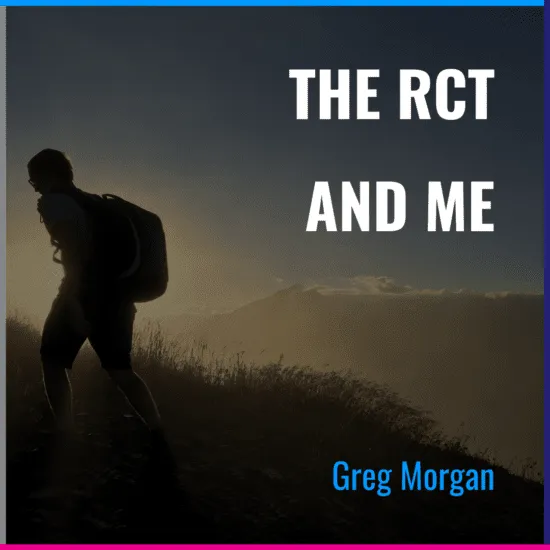
If you live in Pittsburgh and you're even slightly outdoorsy, you've heard someone talk about the Rachel Carson Trail Challenge with a strange mix of pride and trauma.
It's a one-day, sunrise-to-sunset endurance hike across most of the Rachel Carson Trail, held on the Saturday nearest the summer solstice. The distance has run between roughly 34 and 37 miles depending on the year, and the direction alternates, sometimes starting at Harrison Hills Park and finishing in North Park, sometimes the reverse. The finish deadline is sunset, or 15 hours and 4 minutes, whichever comes first.
It is not a race. The organizers are explicit about that. The challenge is to finish in one day.
And it's harder than the mileage suggests, for a reason that catches almost everyone off guard the first time.
The Rachel Carson Trail is primitive by design. No grading, no surfacing, and critically, no switchbacks. Every hill is climbed and descended straight up and straight down.
That last part is the whole story. On a graded trail, elevation gets spread out over distance. Here it doesn't. You get repeated steep climbs followed by repeated steep descents, and the descents are what actually break people. Climbing is a cardiovascular problem you can pace around. Descending is a structural problem. Your quads are working eccentrically to control your body weight down a slope, over and over, for hours, and at some point they stop cooperating.
There's also route-finding. The trail is blazed in yellow, but blazes go missing, trees come down, and sections follow logging roads, power lines, and gas lines where the route isn't obvious. Getting lost is a real and common way to lose time.
Add stream crossings, loose rock, gullies, poison ivy, and whatever the weather decides to do in western Pennsylvania in late June, and you have an event where fitness is necessary but not remotely sufficient.
We had a coach here who'd done the Challenge several times, usually hiking it. One year he decided, in his words because his time at the gym had inflated his head slightly, to do the whole thing wearing a weighted vest.
His notes on how that went are instructive.
The first seven miles were fine. Pleasant, even. He ran into someone he knew and they jogged and walked to the first rest station together. Then his shoulders started complaining about the pack straps. Around mile fifteen, his knees joined in, consistently rather than intermittently. By mile twenty-one, the balls of his feet felt like they were blistering.
At mile thirty-two his mom met him at a road crossing. Four miles left. He didn't stay long.
His description of the last stretch is the part worth keeping: at that point there was no question he'd finish, only how. Slowly and miserably, or not. He picked not. Head down, light feet, keep moving, past people, up one more hill he did not want to climb.
Then, asked afterward whether it was a good idea, he said probably not, his foot still hurt, and yes he'd do it again next year. With the vest. And try to run the whole thing.
That's roughly the correct spirit and also a decent illustration of what actually determines your day, which is much less about your fitness than you'd like it to be.
Assume you're starting a few months out. Here's what actually matters, in rough priority order.
Time on feet, on real terrain. This is the non-negotiable one. You cannot prepare for this with a treadmill and a stair machine. You need long days on trails with real elevation, and you need to build up to a longest training day somewhere in the twenty-mile range. Not because you need to cover the distance in training, but because things start going wrong after hour four that you will never discover on a two-hour hike. Hot spots on your feet, a pack that rubs, food that doesn't sit right.
The organizers run orientation hikes covering sections of the course beforehand. Do these. They solve your terrain problem and your route-finding problem simultaneously, and you'll be walking with people who've done it before.
Downhill specifically. Most people train climbs and neglect descents, then get destroyed by descents. Deliberately seek out steep downhill and spend time on it. Your quads need to be conditioned for eccentric work over hours, and that's a slow adaptation you can't cram.
Strength work, especially single leg. Step-ups, split squats, lunges, and loaded carries. Strong legs handle repeated descents far better, and strong glutes and hips keep your knees tracking properly when you're tired and your form is going. This is the piece most hikers skip and it's the one that most reliably keeps knees healthy through hour ten.
Aerobic base. Long, easy, conversational-pace work. This is the least exciting part of the training and it's what lets you sustain effort for twelve hours without redlining. Hard intervals are almost irrelevant here.
Carrying what you'll carry. Train with the actual pack, actual weight, actual shoes, actual socks. Every piece of gear needs to have been tested on a long day before the Challenge. Nothing new on race day, ever.
Eat before you're hungry and drink before you're thirsty. Twelve-plus hours is a nutrition problem as much as a fitness one, and once you're behind you generally stay behind. Set a schedule and follow it even when you don't feel like it.
Handle your feet early. The moment you notice a hot spot, stop and deal with it. It costs three minutes and it saves your day. People routinely push through a hot spot at mile fourteen and spend miles twenty through thirty-five walking on a blister that's now a wound.
Pace the first ten miles like they don't count. You'll feel great. Everyone does. The temptation to bank time early is strong and it's a trap, because whatever you bank you'll pay back with interest on the climbs later.
Know the cutoffs and where you need to be. There's a hard time limit, and knowing your target pace at each checkpoint turns a vague anxiety into a manageable number.
Expect a bad patch and plan for it. There will be a stretch, usually somewhere in the second half, where you feel awful and question the whole enterprise. This is normal and it usually passes. Eat something, drink something, keep moving, and don't make any decisions during it.
It often isn't, and that's fine. The organizers run shorter events on the same day. The Homestead Challenge is roughly half the distance, and there's a shorter family-friendly option as well, both finishing at the same place as the full Challenge.
Doing the half one year and the full the next is a completely sensible progression, and considerably smarter than attempting the full distance undertrained and spending three weeks recovering.
Distances, start locations, direction, and the registration process change from year to year, so check the official Rachel Carson Trails Conservancy site for current details rather than trusting anything you read in an old blog post. Including this one. Registration typically opens in spring and fills through selection rounds, so it's worth watching for it early.
Nobody finishes this thing and reports that it was fun in the moment.
What they report is that around mile thirty, when everything hurt and there was no good reason to keep going, they kept going anyway. And that they now know something about themselves they didn't know before.
That's the actual product. The training makes it possible. The last four miles are what you came for.




.png)


.png)






.webp)
.webp)
.webp)
.webp)
.webp)





.webp)

.webp)









.webp)




.webp)
.webp)



.webp)
.webp)
.webp)
.webp)
.webp)
.webp)
.webp)
.webp)
.webp)
.webp)
.webp)


.webp)
.webp)
.webp)
.webp)
.webp)
.webp)
.webp)
.webp)
.webp)
.webp)
.webp)
.webp)
.webp)
%2520(1).webp)
.webp)
.webp)
.webp)
.webp)
.webp)
.webp)
.webp)
.webp)
.webp)

.webp)
.webp)
.webp)
.webp)
.webp)
.webp)

.webp)
.webp)
.webp)
.webp)